
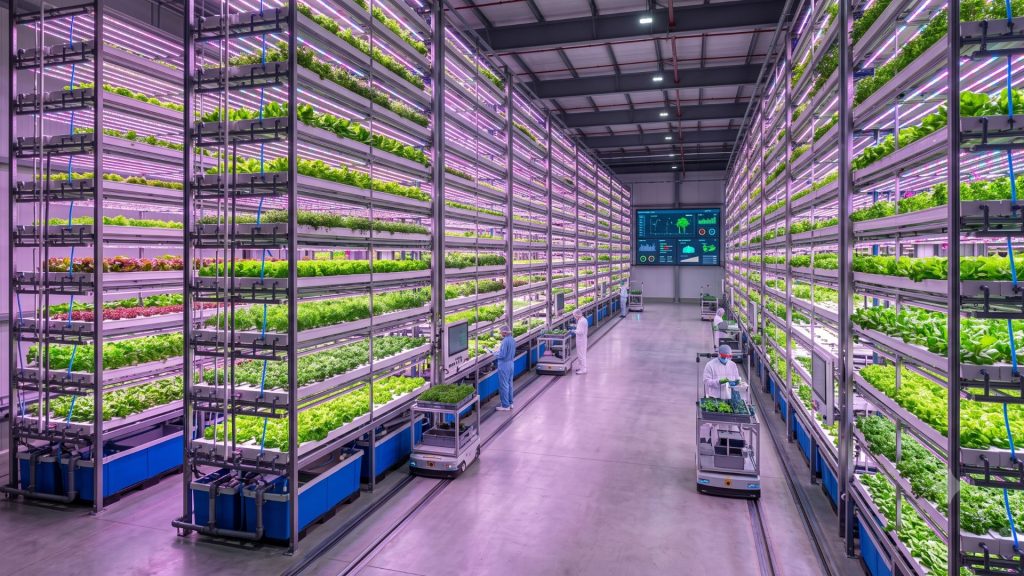
Bustanica in Dubai is one of the most surreal experiences of modern agriculture because it brings food production into a closed, vertical, and technology-controlled structure in a desert environment. The farm has 330,000 square feet, spans three floors, produces over 1 million kg of vegetables per year, and operates without soil, using hydroponic cultivation and a monitored environment. According to Bustanica itself, the system uses 95% less water than traditional outdoor farming methods.
Dubai’s food security strategy aims to diversify supply sources, increase local production, reduce waste, and prepare the emirate for supply crises. In this scenario, Bustanica has become a symbol of a new agricultural frontier: a farm that doesn’t spread across the field but grows upwards, inside a building, using recycled water, sensors, controlled lighting, and millions of daily data.
Bustanica turned Dubai’s desert into a showcase for vertical agriculture
Bustanica does not operate like a conventional farm adapted to the climate of the United Arab Emirates. It functions as an indoor farm, where temperature, humidity, water, nutrients, and light are controlled to maintain constant production throughout the year.
See also
-
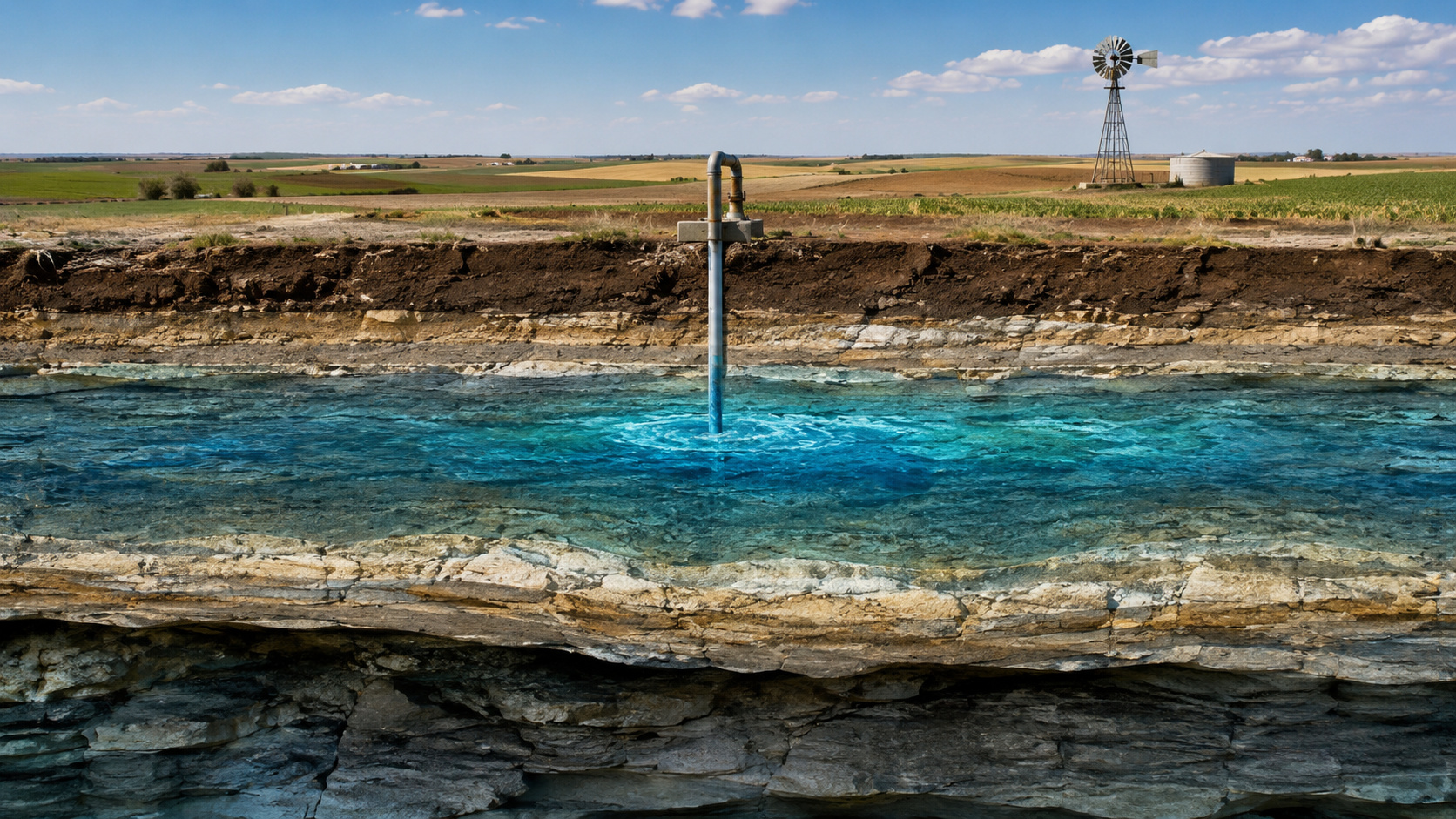
The alert buried under US farms: The Ogallala Aquifer sustains the irrigation that feeds the country, but it is being drained faster than nature replenishes and has already lost more than 50 meters of water in some areas.
-
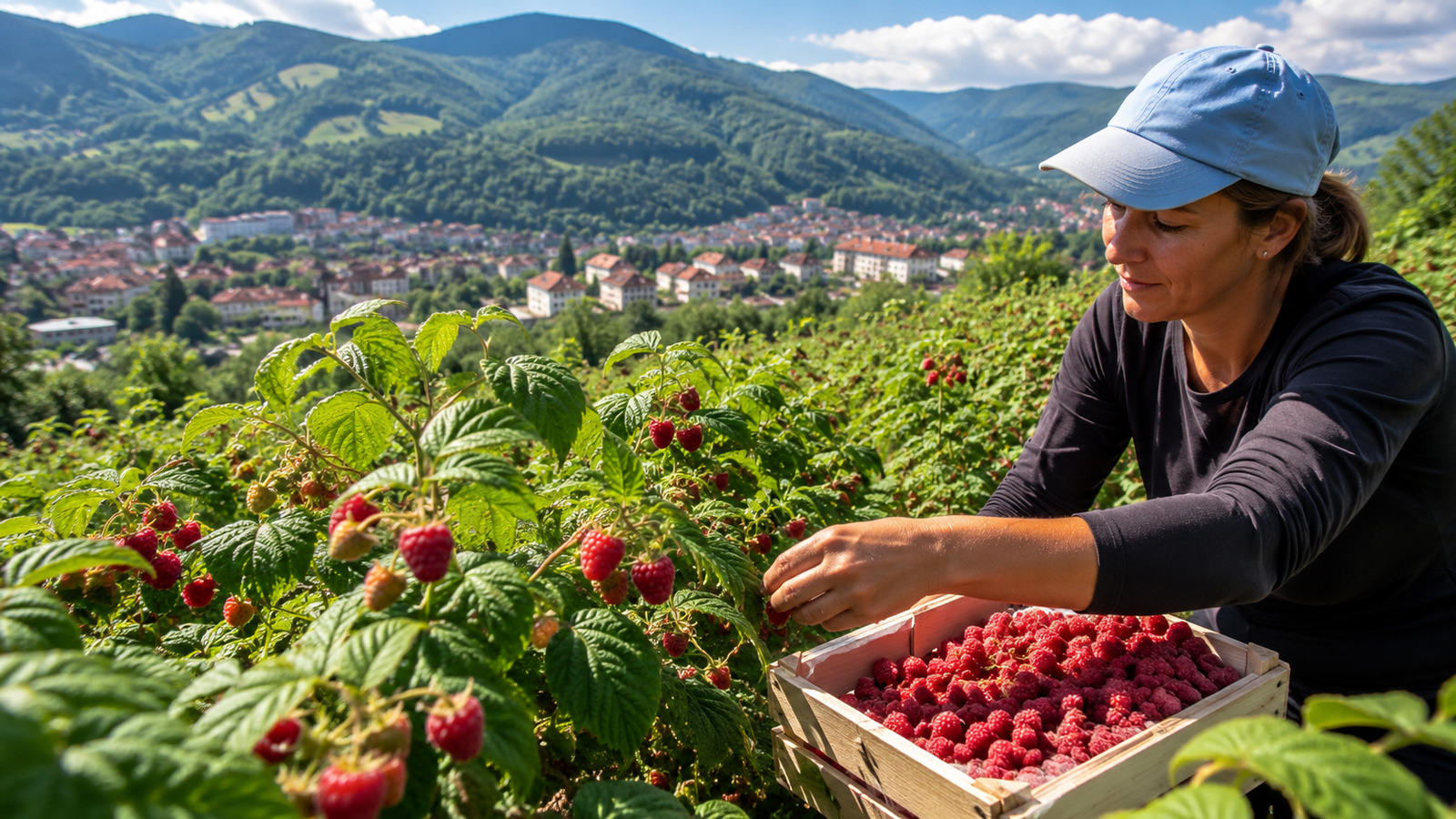
A city with only 17,000 residents produces up to 20,000 tons of raspberries per year, accounts for one-fifth of Serbia’s exports, and sends the production to the United States and Japan.
-
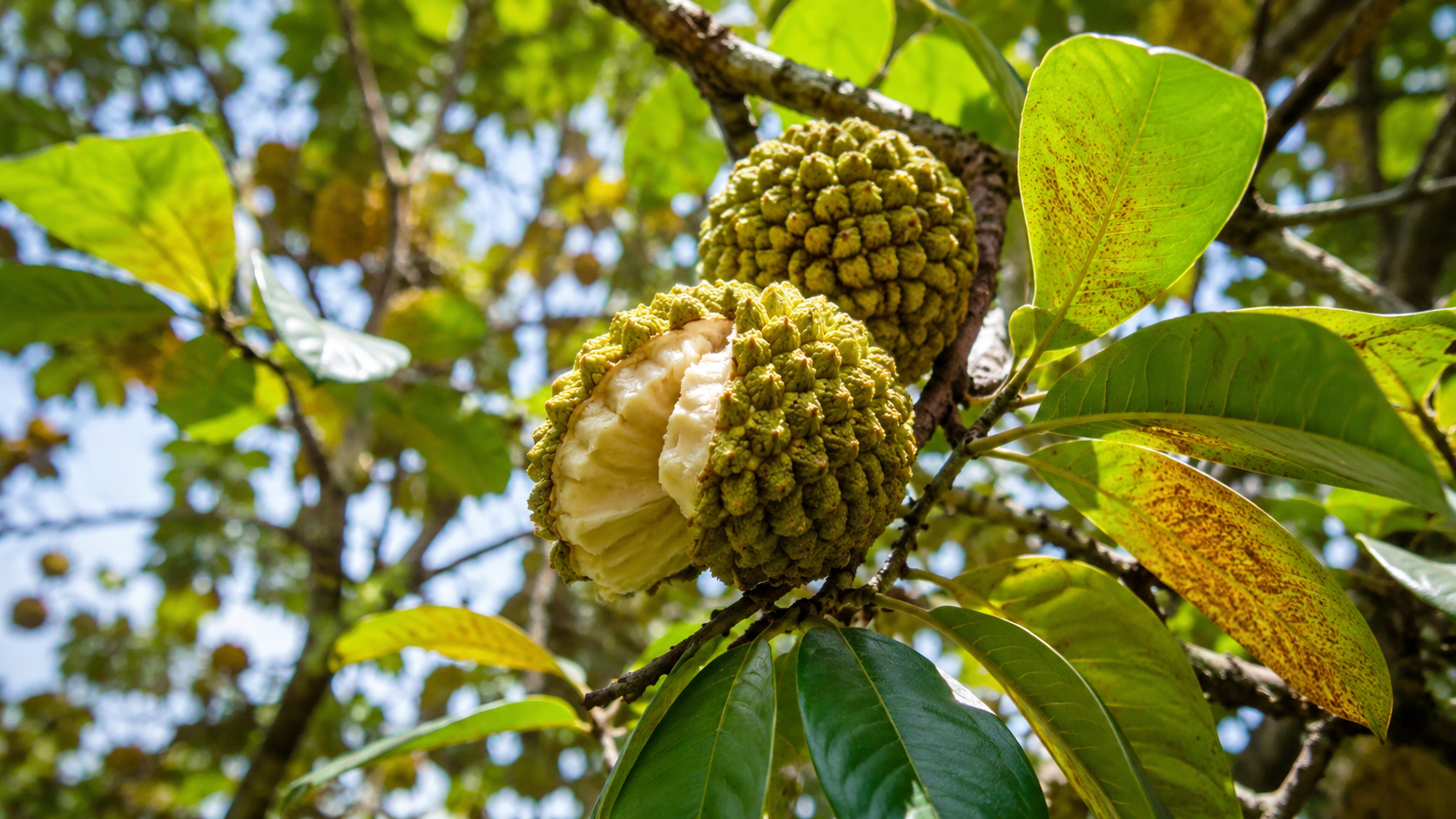
It is not jackfruit, much less soursop: marolo from the Cerrado contains vitamin C, antioxidants, creamy pulp, a distinctive aroma, and a history so strong that it became a cultural heritage.
-
It looks like an apricot, has the scent of mango with passion fruit, and almost never appears on the market: meet the uvaia, a Brazilian fruit with delicate pulp, acidic flavor, and lots of vitamin C.
This model completely changes the logic of agricultural production. Instead of relying on rain, fertile soil, and climate seasons, the farm uses hydroponics, a closed environment, and digital control to cultivate leaves on a large scale.
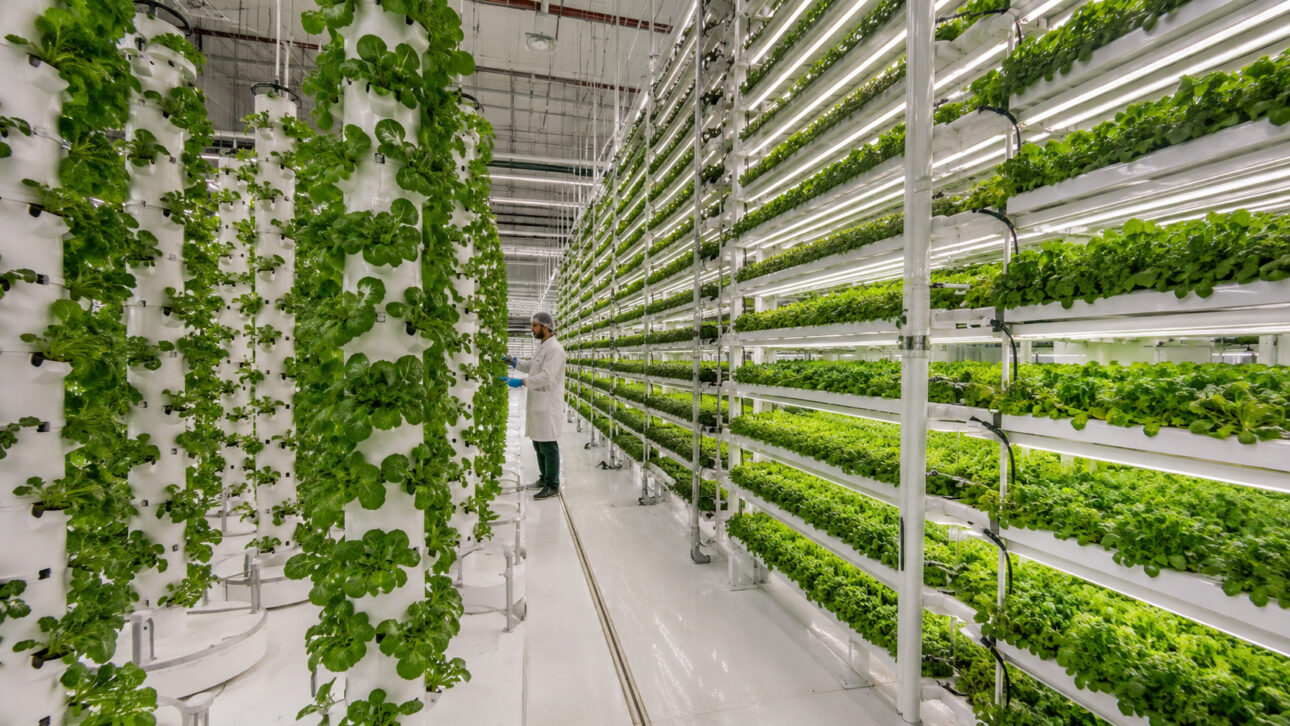
The company itself states that its system does not use soil. The plants receive purified water and precisely calculated nutrients, delivered directly to the roots to promote growth, quality, and consistency.
Vertical farm has 330,000 square feet and three floors of cultivation
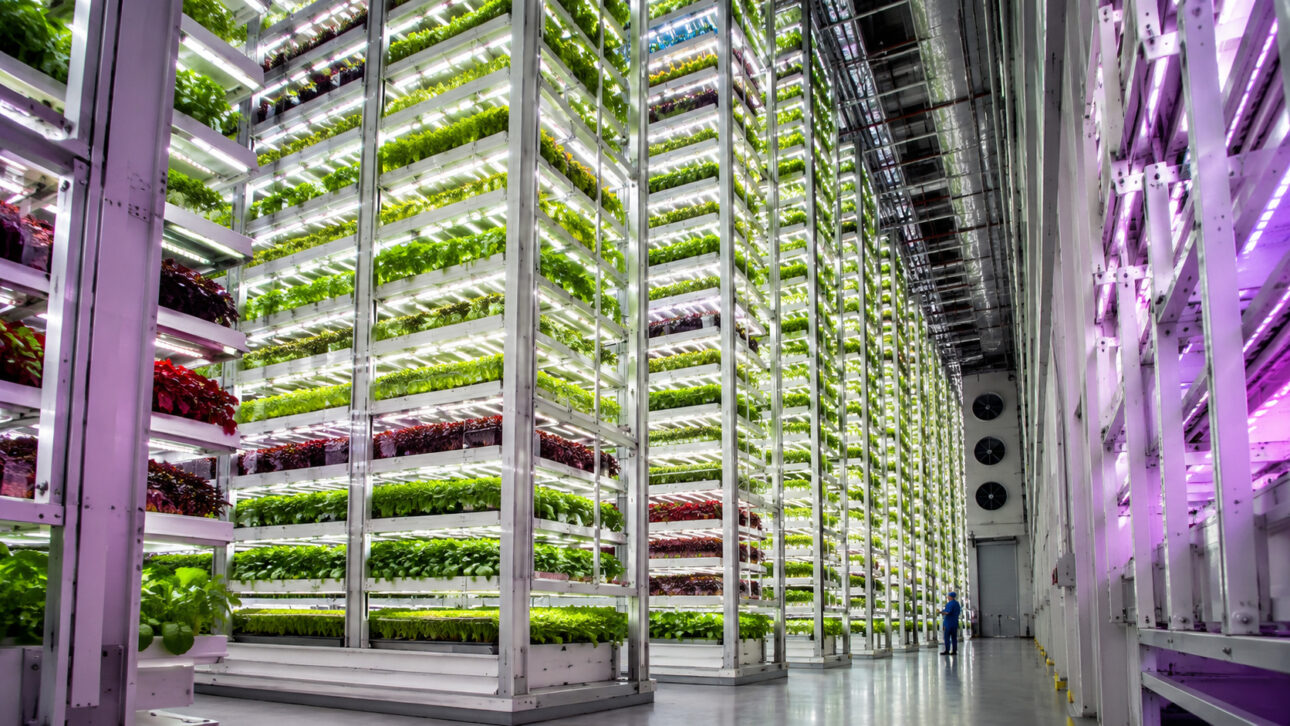
The facility has 330,000 square feet and is spread over three floors, forming a vertical agricultural structure instead of a horizontal rural area.
This size places the farm in a rare category within indoor agriculture. Emirates Flight Catering also describes Bustanica as the largest indoor vertical farm in the world, located near Al Maktoum International Airport, at Dubai World Central.
The location is strategic because it brings production, logistics, and consumption closer. In a global city like Dubai, producing fresh greens near distribution centers reduces some of the dependency on long import chains.
Production exceeds 1 million kg per year without relying on soil
Bustanica reports that it produces more than 1 million kg of vegetables per year. Emirates also points to a capacity equivalent to about 3 tons per day of locally produced leafy greens.
This number gains significance because the production occurs in a closed, soilless system. Instead of planting on hectares of land, the farm uses vertical layers, nutrient-rich water, and permanent control of the internal environment.
The production includes leaves, herbs, and microgreens. Bustanica itself cites varieties such as lettuces, spinach, parsley, kale, arugula, microgreens, and herbs in its product line.
Hydroponic system uses 95% less water than traditional agriculture
Water savings is the most important data to understand the relevance of Bustanica in Dubai. According to the company, hydroponic cultivation uses up to 95% less water than traditional outdoor agriculture.
The official comparison is straightforward: Bustanica reports that its system uses about 15 liters of water to produce 1 kg of food, while traditional outdoor methods would require about 317 liters for the same volume.
In an arid region, this difference changes the strategic weight of the technology. The farm does not solve all the food challenges of the Emirates alone, but it shows how the production of fresh vegetables can be redesigned where water and fertile land are limited resources.
Recycled water and closed circuit reduce waste in cultivation
Bustanica states that the nutrient-rich water is recycled and reused within the system. This closed loop helps reduce waste and prevents nutrients from being lost in the soil, a common problem in some conventional agriculture.
The company also reports that the operation saves 250 million liters of water per year compared to traditional outdoor methods. This data reinforces why the farm has become a showcase for food production in water-scarce regions.
The hydroponic system also reduces the need for agricultural soil. In a country marked by limitations of arable land and extreme climate, this point makes vertical farming a niche solution with strong strategic appeal.
Millions of data points per day control light, water, and nutrients
The most technological part of Bustanica is in data control. The company claims that the plants are supported by millions of data points collected daily, used to adjust growth, lighting, water, and nutrients.
This transforms the farm into a precision agriculture operation. Each cultivation variable can be monitored, tested, and adjusted to maintain productivity, quality, and standardization during the plant cycle.
Bustanica also states that it uses machine learning, artificial intelligence, and advanced methods to cultivate and sustain the plants. In this case, agriculture functions as a combination of biology, engineering, software, and environmental control.
The opening of the farm was announced in July 2022 as a milestone for vertical farming in Dubai. The Dubai Media Office reported that the project was supported by an investment of US$ 40 million.
At the time, the facility was the first vertical project by Emirates Crop One. The initiative brought together Emirates Flight Catering, one of the largest catering operations in the world, and Crop One, a technology company focused on indoor agriculture.
The investment shows that the project was born with commercial ambition, not as a small experiment. The proposal was to produce at scale, supply local markets, and integrate agricultural technology into the UAE’s food strategy.
Emirates Flight Catering fully took over Bustanica in 2024
In February 2024, Emirates Flight Catering announced the full acquisition of Emirates Bustanica. The operation was previously called Emirates Crop One and has now consolidated Bustanica as a consumer brand and indoor farm linked to the company.
Emirates Flight Catering is one of the largest catering operations in the world. This connection makes Bustanica especially relevant because local agricultural production can supply a food chain with high demand and structured logistics.
The acquisition also reinforced the vision of food and water security. Bustanica’s statement claims that the move helps sustain the UAE’s vision of strengthening agricultural capabilities and water security.
Local production attempts to reduce dependence on long supply chains
Dubai is part of a region that heavily depends on global chains to ensure food supply. The emirate’s official food security strategy seeks to increase local production and strengthen preparedness against crises.
Bustanica fits into this scenario as a producer of fresh vegetables within the emirate itself. The leaves are grown locally and distributed in large retail networks in the UAE, as well as appearing in meals served by airlines.
This shortening of the chain is important for perishable products. Fresh leaves depend on time, refrigeration, and logistics, and local production can reduce some of the vulnerability associated with international transport.
Indoor cultivation reduces exposure to climate, pests, and fungi
Bustanica reports that production takes place in a controlled environment independent of weather conditions. This allows cultivation throughout the year, without relying on seasons or extreme temperature variations.
The company also claims that its techniques eliminate the use of pesticides, herbicides, fungicides, and other agricultural chemicals in the cultivation process. This point is relevant because the farm operates in a closed environment, with less exposure to external pests.
The operation also reduces direct human contact with the plants. According to Bustanica, humidity control and limited human interaction decrease risks of contamination and diseases associated with cultivation.
Leaves are sold as ready-to-eat products
Bustanica presents its vegetables as clean and ready-to-eat products. The company claims that its leaves can be consumed directly from the package, without the need for washing, because even tap water could contaminate the product.
This positioning has commercial value in cities with accelerated consumption. The product is not only sold as a local vegetable but as fresh, sanitized, and convenient food for supermarkets, restaurants, cafes, and airlines.
The product line includes leaves and mixes aimed at daily consumption. The official page lists options such as romaine, spring mix, everyday mix, power blend, kale, spinach, edible flowers, and other varieties.
Vertical agriculture changes the logic of agricultural space usage
The vertical model alters one of the foundations of conventional agriculture: the need for large horizontal areas. At Bustanica, production is stacked in layers within growing rooms, allowing the multiplication of space usage in a closed environment.
This logic is especially attractive for cities and countries with little agricultural land. Instead of competing for large open areas, the system transforms internal structures into productive spaces, controlled by technology and adapted to specific crops.
The model, however, is more suitable for leaves, herbs, and short-cycle vegetables. Bustanica itself focuses its production on leafy greens, microgreens, herbs, and similar varieties, not on grains or extensive crops.
Bustanica shows agriculture closer to the precision industry
Bustanica’s operation brings agriculture closer to a high-precision industrial line. The farm relies on engineers, agronomists, horticulturists, scientists, plant biologists, and digital systems to maintain the production environment.
The team monitors growth conditions, collects data, and conducts tests to improve yield and knowledge about the plant cycle. This model shifts the production center to permanent technical control.
Instead of an exposed field, an installation emerges where water, light, and nutrients are calculated. The traditional farmer gives way to a hybrid operation, with characteristics of a laboratory, factory, and farm at the same time.
Desert farm became a symbol of modern food security
Bustanica gains relevance because it responds to a real supply pressure. Dubai’s food security strategy includes expanding local production, diversifying import sources, and improving crisis preparedness.
In this context, a vertical farm in the desert functions as a showcase of resilience. It does not depend on fertile soil, does not rely on rain, reduces water consumption, and brings fresh leaf production closer to the consumer market.
The project shows how countries with severe natural limits can invest in technology to produce part of their own food. It is not a total replacement of traditional agriculture, but a strategic layer within a broader food matrix.