
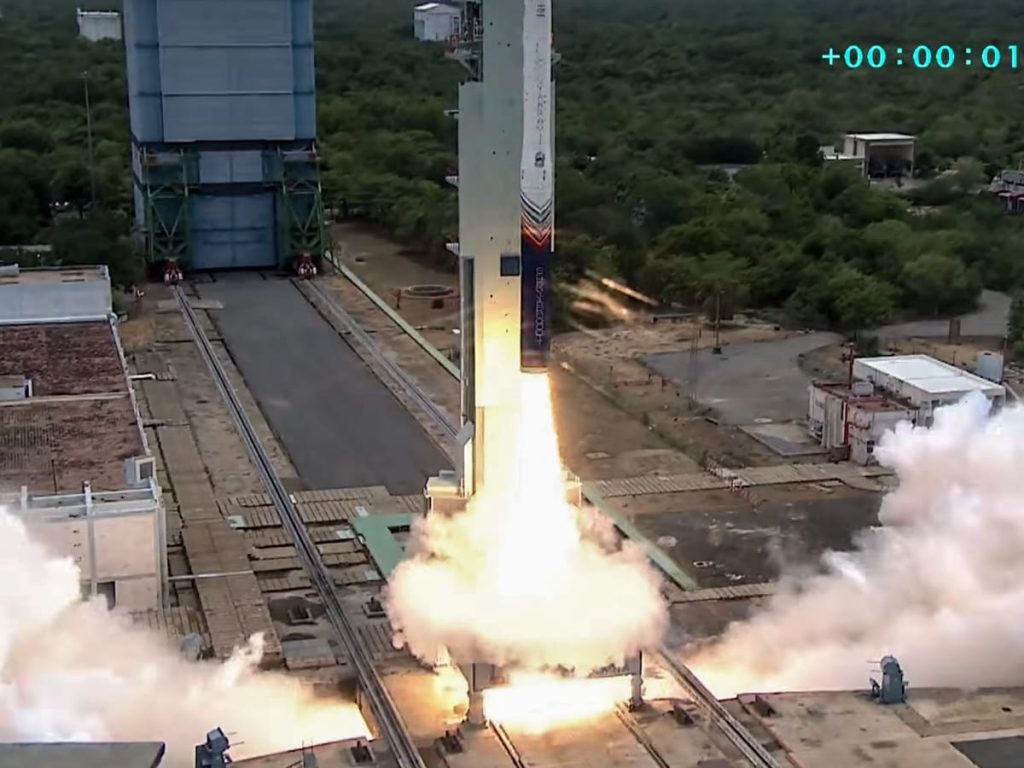
Skyroot Aerospace’s Vikram-1 lifted off successfully from the Satish Dhawan Space Centre at Sriharikota on July 18, becoming India’s first privately built orbital rocket to reach space. The startup, which became India’s first ever space tech unicorn in June, has attained this milestone six years after the country first opened up its space sector to private players in 2020.
He adds that the mission shows that a private Indian team can take a multi-stage rocket from the ‘drawing board to the launch pad’, on an almost “entirely indigenous, largely 3D-printed and carbon-composite platform”. Vikram-1 is designed to carry small satellites weighing around 350 kg to the low Earth orbit, which Chandana calls the “sweet spot for the dedicated small-satellite market—big enough to matter commercially, small enough to fly fully subscribed at cadence”.
For venture investors, this milestone gradually “shifts the conversation from technology risk to execution risk”, says Kushal Bhagia, founder and partner at All In Capital, an investor in Earth-observation startup PierSight. And as the ecosystem matures, investors can underwrite businesses with greater confidence because key infrastructure constraints begin to reduce.
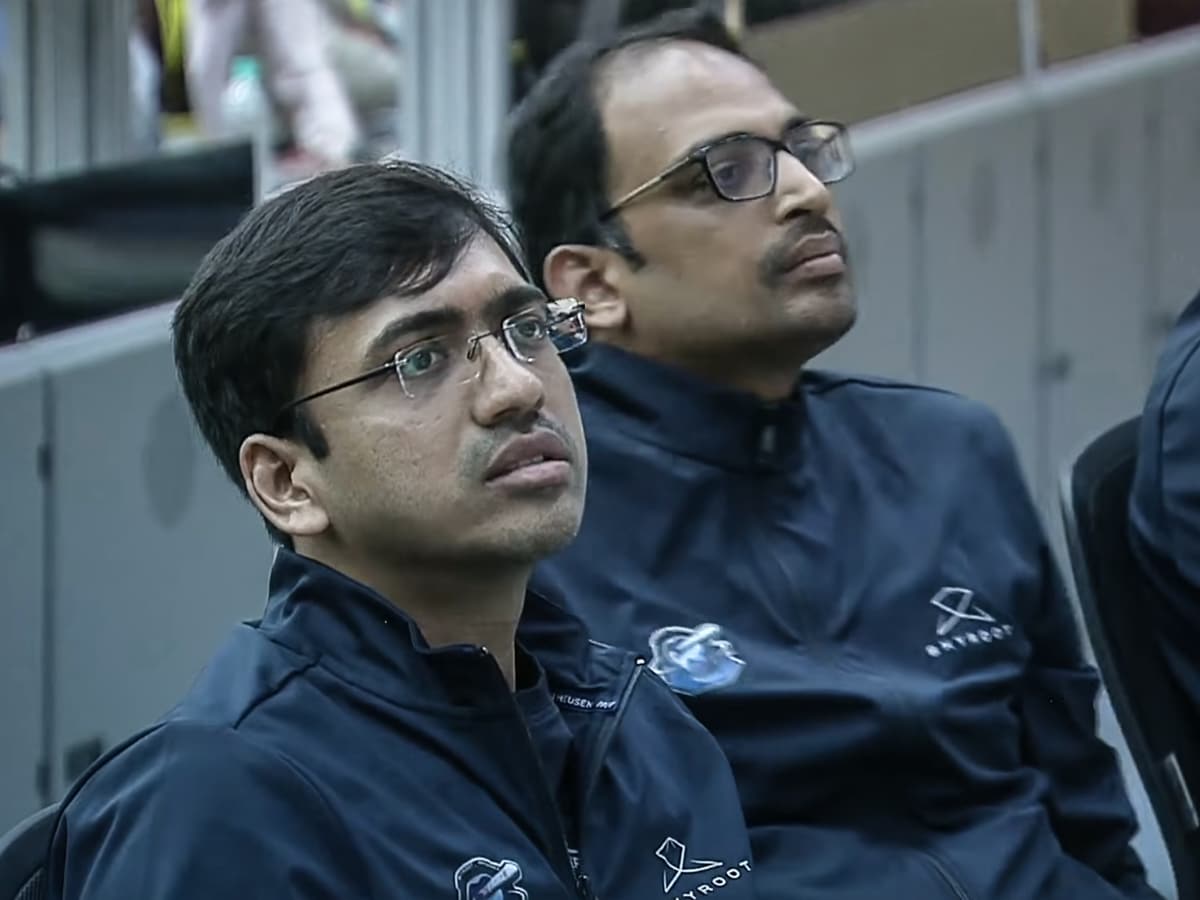
Skyroot founders Pawan Kumar Chandana and Naga Bharath Daka moments before Vikram-1’s launch. | Photo: Screengrab/Forbes India
Inflection Point
Investors believe that calling this launch India’s ‘SpaceX moment’ is perhaps the wrong reference point. Vipul Patel, partner for seed investing at IIMA Ventures, argues that this is, instead, Skyroot’s ‘Electron moment’, a reference to Rocket Lab’s 2018 breakthrough that completely changed the small satellite market by providing them dedicated rides to space. The distinction matters because SpaceX’s real inflection point, Patel notes, came years later, through reusability and launch cadence (launch frequency), not in its maiden orbital success. “A single successful launch is a proof point, but sustained execution is what fundamentally changes the market,” says Bhagia.
Chandana says the success of Vikram-1 not only changes the conversation with customers from “can they actually do this?” to “when can I book a slot?”, but also with investors as it “de-risks the path to higher cadence and sustained revenue”.
However, both investors say that a second successful flight, a shift from occasional launches to predictable cadence (launch frequency), priced commercial contracts and progress toward Skyroot’s next vehicle, the heavier Vikram-2, will determine whether Vikram-1 becomes a genuine inflection point.
But what does a working private launch vehicle structurally change for Indian space startups? The wait time. Today, satellite companies that have built hardware often sit for months or years for a launch slot, historically dominated by Isro. A second credible domestic launch provider compresses that timeline, and for capital constrained startups, time-to-orbit is directly time-to-revenue.
“Faster launch availability means satellites start operating earlier, shortening the gap between product development and revenue generation,” Bhagia says. He adds that sustained reliability could eventually make insurers more willing to underwrite missions, itself a meaningful unlock, since insurance often determines whether commercial customers feel comfortable choosing a given launch provider at all.
Patel sees the immediate capital effects flowing somewhat differently and towards the launch-adjacent supply chain such as propulsion systems, avionics, ground systems and component makers rather than directly benefiting Earth-observation or satcom startups. The growth of these downstream companies, he says, is driven by an entirely separate set of levers such as “spectrum policy, demand and government procurement”.
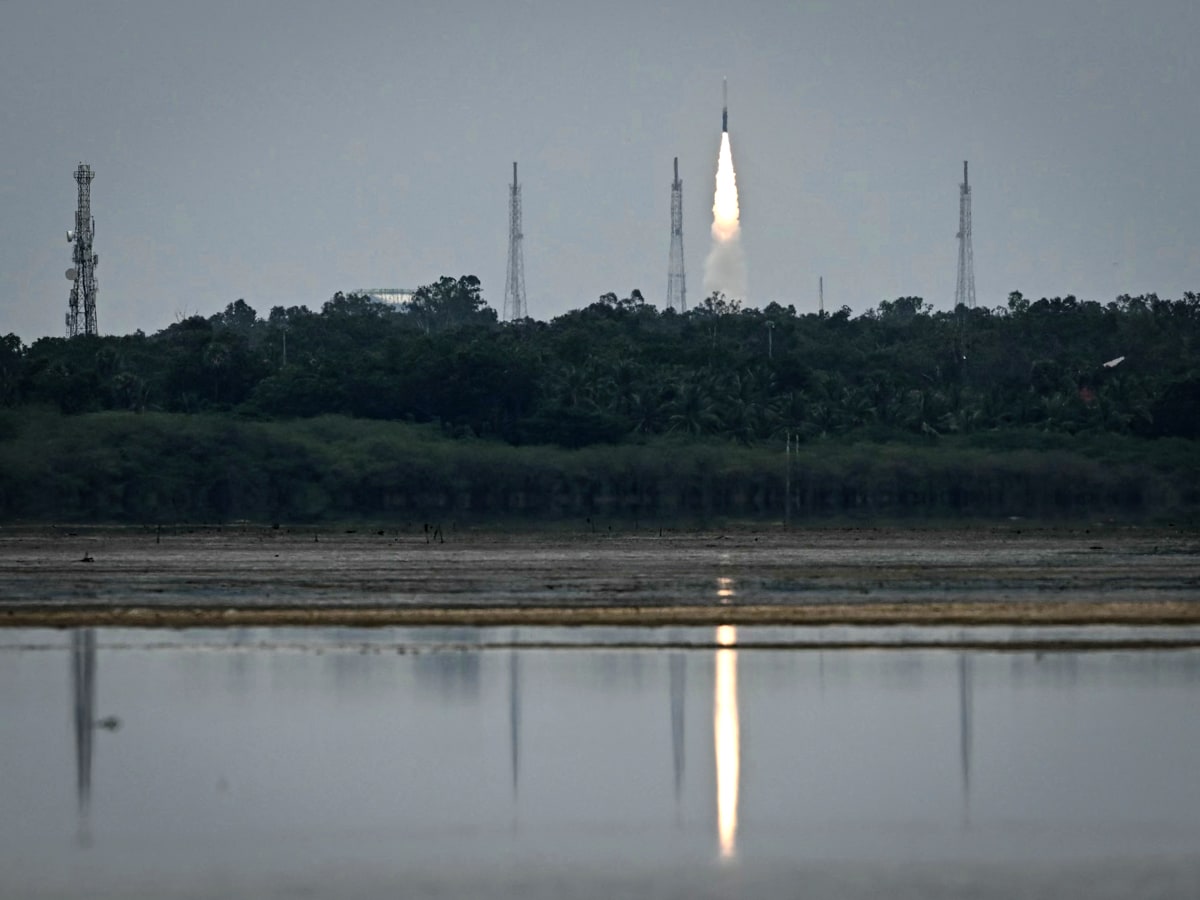
India’s Skyroot Aerospace orbital rocket Vikram-1 blasts off from the Satish Dhawan Space Centre in Andhra Pradesh’s Sriharikota on July 18, 2026. (Photo by R. Satish BABU / AFP)
Familiar Playbook
To illustrate exactly what shifts with this launch, both investors point to a familiar domestic success story—UPI.
Just as India’s digital payment rails unlocked a massive wave of fintech startups, a reliable, homegrown rocket serves as a similar catalyst. It is the crucial infrastructure that allows local satellite and space-service companies to launch whenever they need to, without waiting in line for foreign rockets.
Chandana also points to the telecom boom of the late 1990s. Once private operators entered the market, expensive and scarce phone connections vanished, creating one of the world’s largest mobile networks in under a decade. For India’s space sector, the lesson is simple, when you make access cheap and easy, industry growth explodes.
Whether Vikram-1 triggers that same compounding effect will not be decided by the maiden launch alone, but by whether India’s larger space tech sector, and the ecosystem betting on it, can turn one flight into a schedule.
Does it move the $44 billion needle?
India’s space economy is officially targeted to grow from roughly $8.4 billion in 2022 to $44 billion by 2033, according to government estimates. This is a number the investors are careful to contextualise. “That $44 billion figure is a stated target, not a base forecast,” Patel says.
A single flight can’t compress the timeline to capture 8 percent of the estimated global space market on its own, but Bhagia says it “can accelerate momentum” by removing one of the ecosystem’s clearest constraints, limited launch availability, which in turn lets capital “circulate more efficiently” across the value chain.
Ramesh Kumar V, co-founder and CEO of Grahaa Space, one of the startups that flew a technology-demonstration payload SOLARAS aboard Vikram-1, frames the launch’s significance around exactly that multiplier effect. A successful mission, he says, opens India’s private launch market to more international satellite operators and developing nations looking to launch on Indian rockets rather than building their own capacity. “It will also give more opportunities for nano satellite launches and bring down the cost of launch as well,” says Malaya Kumar, director at Grahaa Space.
Ecosystem’s First Customers
Vikram-1’s payload bay was itself a small advertisement for that thesis. Alongside Skyroot’s own SCOPE demonstrator, the rocket carried Grahaa Space’s SOLARAS, testing the startup’s satellite bus, sub-systems and a hosted-payload model for academic research that Grahaa hopes will become its revenue vertical.
Also aboard Vikram-1 was Cosmoserve Space’s Embrace, a soft-robotic capture system aimed at future in-orbit servicing and debris removal. “We accelerated our soft-robotic capture technology from concept to flight-ready in just four months,” says Cosmoserve founder and CEO Dr Chiranjeevi Phanindra, calling it a step toward “orbital sustainability”.
Chandana frames the payload roster as deliberate ecosystem-building. “This mission is as much about validating our vehicle as it is about giving India’s emerging space companies their shot at testing hardware in orbit.”
What to watch next
Skyroot’s second vehicle, Vikram-2, is already in production. It is a one-tonne-class orbital launcher with a cryogenic upper stage, that the unicorn hopes to fly in 2027, which is designed to serve a wider range of operators, including constellation launches. The company says its three Hyderabad campuses now have the capacity to build one Vikram-1 a month.
Chandana’s team is also simultaneously working on a reusable launch vehicle that will significantly increase the tonnage capable of being carried to space.
Meanwhile, Grahaa Space is already in the process of raising funds to finance its target of launching over 1,500 satellites in the five years after 2027. “We are also working towards streaming near real-time geospatial video data using a constellation of nano satellites,” Kumar says which will be useful in surveillance, disaster and emergency response, industrial intelligence, and for tracking movement of various on-ground activities.