
Published on
June 27, 2026

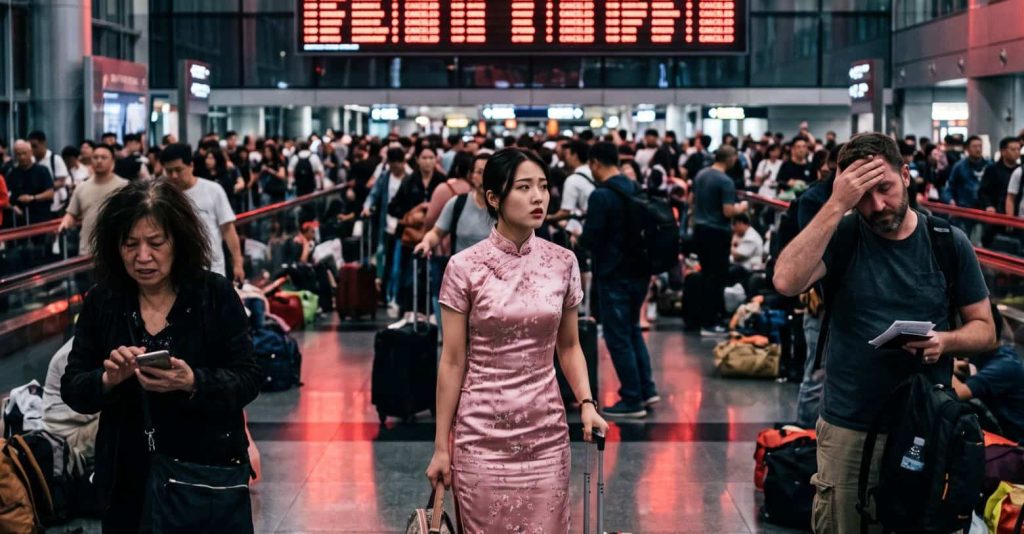
Image generated with Ai
Widespread operational disruptions have been experienced across the aviation network in China on 26th June, 2026, with extensive flight cancellations and delays recorded across major hubs in Beijing, Changzhou, Chengdu, Zhangjiajie, Fuzhou, Guangzhou, Haikou, Hangzhou, Hohhot and Jieyang. In total, 47 flight services were cancelled and 2,037 flights were delayed, impacting thousands of passengers and heavily disrupting major domestic and international carriers, including Air China, China Southern, China Eastern, XiamenAir, Hainan Airlines and several other operators.
Aviation infrastructure throughout China faced a challenging operational day as major hubs from Beijing to Guangzhou struggled with scheduling backlogs. For travellers across China, the widespread nature of these delays across ten distinct regions highlights the complex, interconnected nature of the nation’s airspace, where disruptions at major gateways rapidly create a ripple effect across smaller regional destinations.
The operational setbacks were distributed across several key aviation gateways throughout China, with varying degrees of severity noted at each location:
- Beijing Capital Int’l: A total of 6 cancellations and 296 delays were recorded at this premier gateway in Beijing, representing a significant disruption to scheduling at one of the busiest hubs in China.
- Changzhou Benniu: Operations at Changzhou Benniu were similarly impacted, with 4 cancellations and 56 delays logged for services operating through Changzhou.
- Chengdu Tianfu Int’l: In Chengdu, considerable scheduling pressure was felt at Chengdu Tianfu Int’l, where 3 flight cancellations and 240 flight delays were registered.
- Dayong: Serving the prominent tourism region of Zhangjiajie, the airport at Dayong recorded 3 cancellations and 9 delays, affecting regional connectivity to Zhangjiajie.
- Fuzhou Changle Int’l: Flight schedules through Fuzhou were heavily interrupted, with 2 cancellations and 121 delays documented at Fuzhou Changle Int’l.
- Guangzhou Baiyun Int’l: The highest volume of disruptions across China was experienced in Guangzhou, where Guangzhou Baiyun Int’l recorded an acute 13 cancellations and 724 delays, severely impacting southern networks.
- Haikou Meilan Int’l: Serving the island province of Hainan, 5 cancellations and 154 delays were encountered by passengers travelling through Haikou Meilan Int’l in Haikou.
- Hangzhou Xiaoshan Int’l: Heavy delays were observed in Hangzhou, where Hangzhou Xiaoshan Int’l reported 2 cancellations alongside a substantial 308 delays.
- Hohhot Baita Int’l: Northern routes running through Hohhot were also hit, with 2 cancellations and 65 delays confirmed at Hohhot Baita Int’l.
- Jieyang Chaoshan International Airport: A notable 7 cancellations and 64 delays were experienced at Jieyang Chaoshan International Airport, complicating travel within the Jieyang region.
When flight schedules are compromised on this scale across major hubs in China, the immediate consequences are frequently felt by the broader tourism sector. Leisure and business travel itineraries depend heavily on the seamless transit of flights between primary gateways like Beijing and Guangzhou and regional tourist highlights such as Zhangjiajie, Chengdu and Hangzhou. When 2,037 delays occur within a single day, multi-destination itineraries are thrown into disarray, leading to missed hotel reservations, cancelled local tours and a general erosion of traveller confidence.
For regions heavily reliant on independent and group tourism, such as Zhangjiajie (served by Dayong) and the coastal destinations near Fuzhou, Haikou and Jieyang, persistent delays can lead to negative perceptions regarding transport reliability. If international and domestic holidaymakers face continuous uncertainties when flying through Changzhou, Hohhot, or Chengdu, a shift towards alternative transit methods, such as China’s extensive high-speed rail network, may be observed. Over time, airlines operating in China may face reduced forward bookings if scheduling reliability cannot be consistently guaranteed to the public.
What immediate steps should be taken if a flight is delayed or cancelled in China?
If a flight is cancelled or delayed while travelling through hubs like Beijing, Guangzhou, or Chengdu, the operating airline should be contacted immediately. Digital boarding passes and flight status apps should be monitored closely for real-time updates. Passengers located at the airport should proceed directly to the airline’s service desk to seek rebooking options or accommodation vouchers if required.
Advertisement
Advertisement
How can alternative arrangements be secured during widespread disruptions?
When massive disruptions occur across major airports in China—such as those experienced recently in Hangzhou, Changzhou, Haikou and Fuzhou—alternative transport modes should be evaluated. Passengers can check the availability of China’s high-speed rail network as an efficient alternative for domestic travel. Rebookings can also be managed directly through the official mobile applications of carriers like Air China, China Eastern, or China Southern.
What assistance can be expected from airlines for disruptions in regional airports?
For disruptions occurring at regional facilities such as Hohhot Baita Int’l, Jieyang Chaoshan, or Dayong Airport in Zhangjiajie, ground handling staff from the respective airlines are tasked with providing guidance. Depending on the length of the delay and the specific terms of carriage, meals, refreshments, or overnight accommodation are typically coordinated by the carrier for stranded travellers.
Advertisement
Advertisement
Are compensation and refunds applicable for cancelled services within China?
Yes, under standard aviation regulations in China, if a service is cancelled by the carrier, passengers are entitled to a full refund of the unused ticket or a complimentary rebooking on the next available flight. It is highly recommended that official statements or delay certificates are requested from airline staff at the airport, as these documents are strictly required when processing travel insurance claims or ticket refunds later on.
-The flight information is based on data sourced directly from FlightAware. Please note that airlines frequently adjust schedules and routes to prioritize operational safety. In the event of a change, passengers should remain calm and explore alternative flight options. To ensure a smooth journey, it is highly recommended to monitor real-time flight status, understand your carrier’s rebooking policies and maintain a flexible itinerary.
Advertisement
Advertisement
