
Aiqun Yu, Christine Shearer and Joe Hittinger work at Global Energy Monitor, a US-based organisation that seeks to provide the worldwide energy transition with transparent data and analysis.
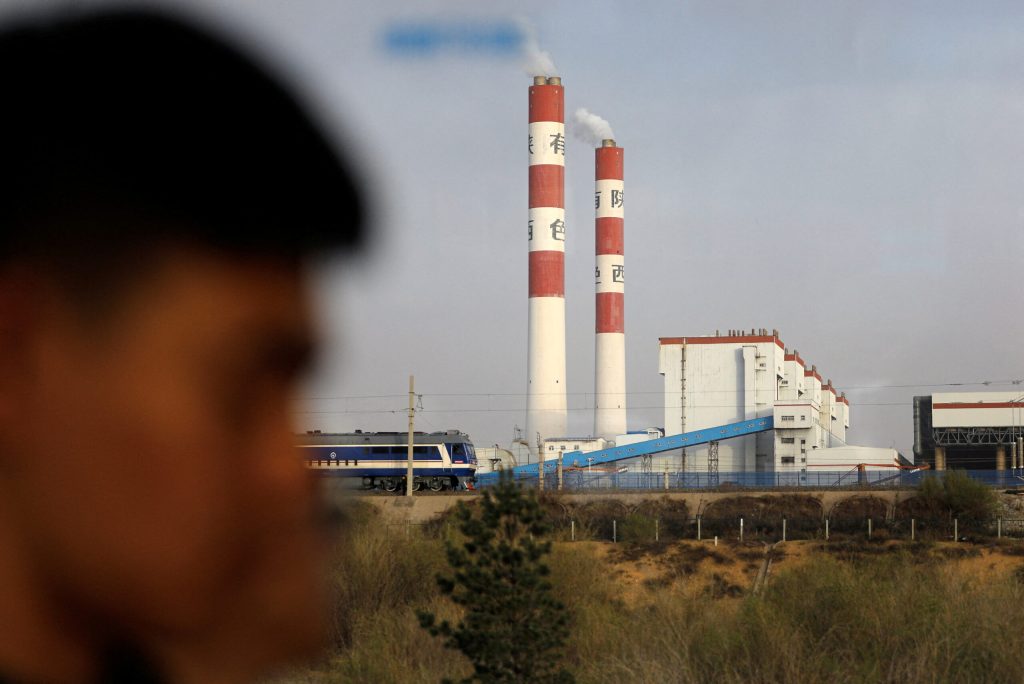
With global oil and gas prices soaring at the start of the Iran war, China quietly broke ground on three major coal-to-gas and coal-to-chemical projects worth roughly $10 billion in two regions with abundant coal resources.
But as a Chinese saying goes, “three feet of ice does not form in a single day”. China’s push to use coal as a substitute for imported oil and gas has been gathering momentum since the Russia-Ukraine war began in 2022, prompting a recalibration of energy security priorities in Beijing and beyond.
The policy raises new concerns, threatening China’s climate goals and growing reputation as a global clean energy leader by creating renewed demand for coal.
A new expansion wave
Over the past three years, China has entered a new cycle of investment in so-called “modern coal chemicals”, differentiated from conventional coal chemicals. Four pathways – coal-to-gas, coal-to-liquids, coal-to-olefins, and coal-to-ethylene glycol – account for the bulk of new modern coal-chemical capacity under development.
Already have an account?
Log in here →
Climate Home News is on the ground in Bonn — one of the few outlets covering the negotiations that will shape COP31 in November.
Join free and keep reading →
It takes less than a minute.
Aiqun Yu, Christine Shearer and Joe Hittinger work at Global Energy Monitor, a US-based organisation that seeks to provide the worldwide energy transition with transparent data and analysis.
With global oil and gas prices soaring at the start of the Iran war, China quietly broke ground on three major coal-to-gas and coal-to-chemical projects worth roughly $10 billion in two regions with abundant coal resources.
But as a Chinese saying goes, “three feet of ice does not form in a single day”. China’s push to use coal as a substitute for imported oil and gas has been gathering momentum since the Russia-Ukraine war began in 2022, prompting a recalibration of energy security priorities in Beijing and beyond.
The policy raises new concerns, threatening China’s climate goals and growing reputation as a global clean energy leader by creating renewed demand for coal.
A new expansion wave
Over the past three years, China has entered a new cycle of investment in so-called “modern coal chemicals”, differentiated from conventional coal chemicals. Four pathways – coal-to-gas, coal-to-liquids, coal-to-olefins, and coal-to-ethylene glycol – account for the bulk of new modern coal-chemical capacity under development.
According to Global Energy Monitor data, proposed and under-construction coal-to-gas capacity is approaching three times current operating capacity. Together, 34 projects under active consideration represent more than 1 trillion yuan ($150 billion) in planned investment and could add roughly 300 million tonnes of annual coal demand if completed, equivalent to South Africa’s entire coal mining capacity.
Most projects are in Xinjiang, Inner Mongolia, Shaanxi and Ningxia, regions with plentiful coal resources and relatively low mining costs. Xinjiang has emerged as the epicentre of the new boom, accounting for more than half of all proposed modern coal chemical projects.
Why the world abandoned coal chemicals
Coal chemicals are often presented as an emerging industry, but the technologies themselves are more than a century old.
Earlier “conventional” coal chemistry was a byproduct of coking, a process run primarily for iron and steel making. “Modern” coal chemistry instead uses gasification to convert coal into synthesis gas, a versatile building block for fuels, plastics, fertilisers and other chemicals that would traditionally be made from oil or gas.
These modern processes were developed in the early 20th century and expanded during periods of wartime fuel shortages. For example, Germany relied heavily on synthetic fuels during the Second World War while South Africa developed similar technologies in the apartheid era to reduce vulnerability to international sanctions.

Once cheap oil and gas became widely available, however, most countries moved away from coal chemicals, which required large amounts of energy, water and capital investment, and generally produced more pollution and carbon emissions than the conventional alternatives.
Today, only a handful of commercial coal gasification facilities operate outside China.
China has already tested this theory once
The current expansion is not China’s first attempt to build a major coal chemical industry.
A previous boom emerged during the 2010s, driven by many of the same arguments: high oil prices, concerns over energy security and expectations that technological improvements would unlock a new era of coal-based industrial growth.
Brazil jostles for rare earths share as US-China rivalry heats up
The outcome was far from successful. Dozens of projects were proposed, but many were delayed, suspended or scrapped before completion, and there were difficulties among those that did get off the ground.
Three of China’s four operating coal-to-gas projects reportedly spent much of the past decade operating at a loss, and several large coal chemical facilities generated only marginal returns despite government support.
Policy support is driving the revival
Backers say technological improvements have made the industry more competitive than it was a decade ago.
Yet coal chemical projects remain highly dependent on oil and gas prices. When international prices rise, coal-derived products can appear competitive. When prices fall, the economics often deteriorate rapidly.
More than changes in technology, government policy has played a pivotal role in the sector’s revival.
Following power shortages in 2021 and the energy market disruptions that followed Russia’s invasion of Ukraine, energy security became a national priority. Coal production expanded, particularly in western China, boosted by government support.
China’s solar exports reach “gigantic” record in March as energy crisis bites
A key policy change in 2022 exempted coal used as industrial feedstock from certain energy consumption controls, easing regulatory pressure on coal chemical projects.
The impact of such measures highlights the degree to which coal chemicals depend on expansive and favourable policy treatment to remain viable.
At the same time, the current expansion is creating new demand for an industry confronting structural decline as China races to renewables in electricity generation.
The cost to China’s climate leadership
Converting coal into fuels and petrochemical products also releases substantially more carbon dioxide than conventional oil- and gas-based alternatives, which themselves are a major source of emissions.
Proponents argue that coupling production with green hydrogen and carbon capture could resolve the emissions problem, but the arithmetic doesn’t support this.
Sinopec’s flagship Dalu coal-to-olefins plant, paired with a 10,000 tonne-per-year green hydrogen demonstration, displaces less than 2% of the plant’s annual coal use. Replicating this across the proposed buildout would consume enormous quantities of clean energy just to partially decarbonise an inherently dirty process.
China could instead leverage that same industrial capacity and policy support to lead the development of cleaner chemical pathways, such as green ammonia for fertiliser, bio-based and CO2-derived feedstocks for plastics, and e-fuels or biofuels where liquid fuels are still needed.
Rather than locking in another generation of coal-dependent infrastructure, China should learn from the lessons of the past and seek a cleaner and more viable industrial future.