
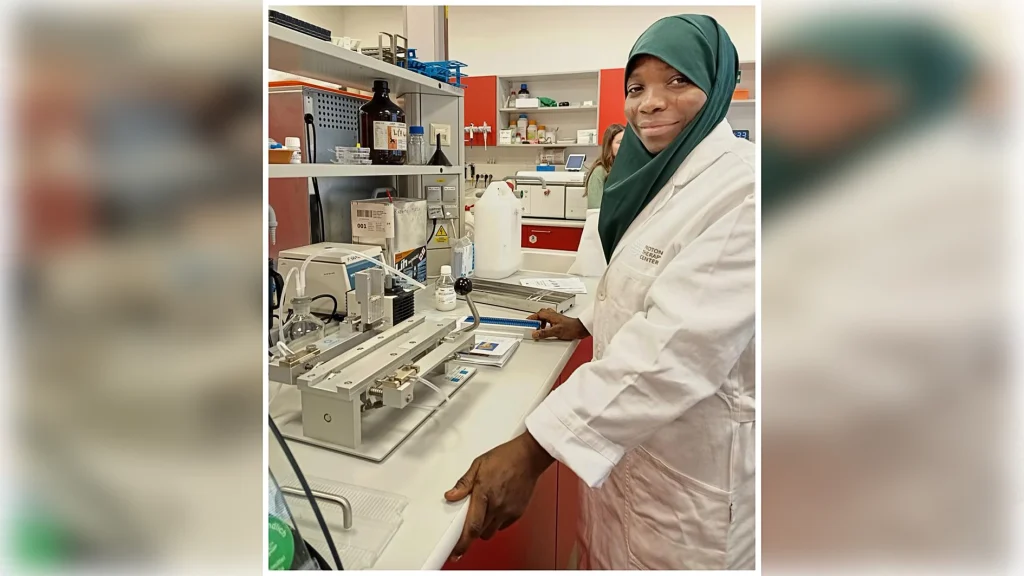
As global populations continue to expand and the demand for animal-derived protein increases, the need for innovative and sustainable livestock production systems has become more urgent than ever. Animal reproductive biotechnology is increasingly recognized as a critical scientific field capable of addressing food security challenges through improved breeding efficiency, genetic advancement, and sustainable livestock management.
According to Nofisat Abisola Muhammed, an animal reproductive physiologist and biotechnology researcher, reproductive technologies such as artificial insemination, semen cryopreservation, sperm quality assessment, and assisted reproductive techniques are transforming modern livestock production by enabling farmers to achieve greater productivity while maintaining animal welfare standards and environmental sustainability.
Muhammed’s research and professional work focus on reproductive physiology, semen analysis and cryopreservation, fertility preservation, and assisted reproductive technologies in livestock species. Her scientific contributions aim to improve reproductive efficiency in cattle, goats, and poultry production systems, thereby supporting agricultural sustainability and strengthening food systems.
She explained that reproductive biotechnology provides farmers with powerful tools to improve genetic quality, enhance fertility rates, reduce breeding-related losses, and increase livestock productivity, these advances are essential for meeting future food demands while promoting sustainable agricultural development.
Artificial insemination (AI) has emerged as one of the most influential technologies in livestock breeding. By allowing the use of genetically superior semen across large populations without relying solely on natural mating, AI improves breeding outcomes, accelerates genetic improvement, and reduces the transmission of reproductive diseases. These benefits contribute directly to increased production of milk, meat, and poultry products while improving farm profitability and efficiency.
Muhammed’s academic research has contributed to the advancement of reproductive biotechnology through investigations into fertility preservation and semen quality enhancement. Her Master’s research at the University of Ibadan examined the cytoprotective effects of natural honey on breeder cock semen, demonstrating the potential of natural bioactive compounds to preserve sperm quality and fertilizing capacity during semen storage. The findings, published in the Journal of Applied Life Sciences International, provide valuable insights into cost-effective approaches for improving reproductive performance in poultry production systems.
Earlier, her undergraduate research explored the effects of incubation temperatures on goat sperm motility and functional integrity during cryopreservation using egg-yolk extenders. This work contributed to the growing body of scientific knowledge aimed at optimizing semen preservation protocols and improving fertility outcomes in small ruminants.
Beyond her academic research, Muhammed has acquired practical field experience in livestock reproductive management through her work with cattle and goat production systems. Her professional experience includes participation in artificial insemination programs, estrus detection and monitoring, reproductive profiling, ultrasound-based reproductive assessments, and livestock fertility management. These activities have provided valuable insight into the real-world challenges facing livestock producers and the role reproductive technologies play in improving production efficiency.
Currently serving as a Research Intern at the Czech University of Life Sciences (CZU), Prague, Nofisat is engaged in advanced reproductive biotechnology research involving Computer-Assisted Sperm Analysis (CASA), flow cytometry, semen quality evaluation, and fertility assessment. Her work includes the analysis of sperm motility, viability, membrane integrity, acrosome integrity, and mitochondrial function using modern laboratory technologies that support evidence-based improvements in animal reproduction.
According to her, semen cryopreservation remains one of the most strategically important technologies in livestock production because it allows long-term preservation and distribution of superior genetics across regions and generations. Enhanced cryopreservation protocols improve breeding efficiency, support genetic conservation programs, and strengthen livestock resilience against future production challenges.
“Improving reproductive efficiency is not only about increasing animal numbers,” she noted. “It is about enhancing the quality, productivity, health, and sustainability of livestock populations while supporting global food security goals.”
Her scientific expertise extends beyond laboratory research. Muhammed has actively participated in international scientific conferences and professional development programs focused on animal reproduction, animal welfare, reproductive biotechnology, embryo technologies, and sustainable livestock systems. She has presented research findings at international scientific meetings in Europe and has participated in professional forums involving leading researchers in animal reproduction and biotechnology.
Experts increasingly recognize that reproductive biotechnology will play a pivotal role in addressing future agricultural challenges. Improved fertility management, semen preservation, genetic improvement programs, and assisted reproductive technologies have the potential to significantly enhance livestock productivity while reducing resource use and environmental impact.
Muhammed believes that continued investment in reproductive science and biotechnology will be essential for developing resilient livestock systems capable of supporting growing global populations.
“Scientific innovation in animal reproduction has become a cornerstone of sustainable livestock production,” she stated. “By advancing reproductive technologies and improving fertility outcomes, we can help build more efficient food systems, strengthen agricultural economies, and contribute meaningfully to global food security.”
As nations seek sustainable solutions to increasing food demands, the integration of reproductive biotechnology into livestock production systems is expected to become increasingly important. Through her research, publications, international scientific engagement, and practical experience in reproductive management, Muhammed continues to contribute to scientific efforts aimed at improving animal productivity, promoting sustainable agriculture, and supporting long-term food security worldwide.