
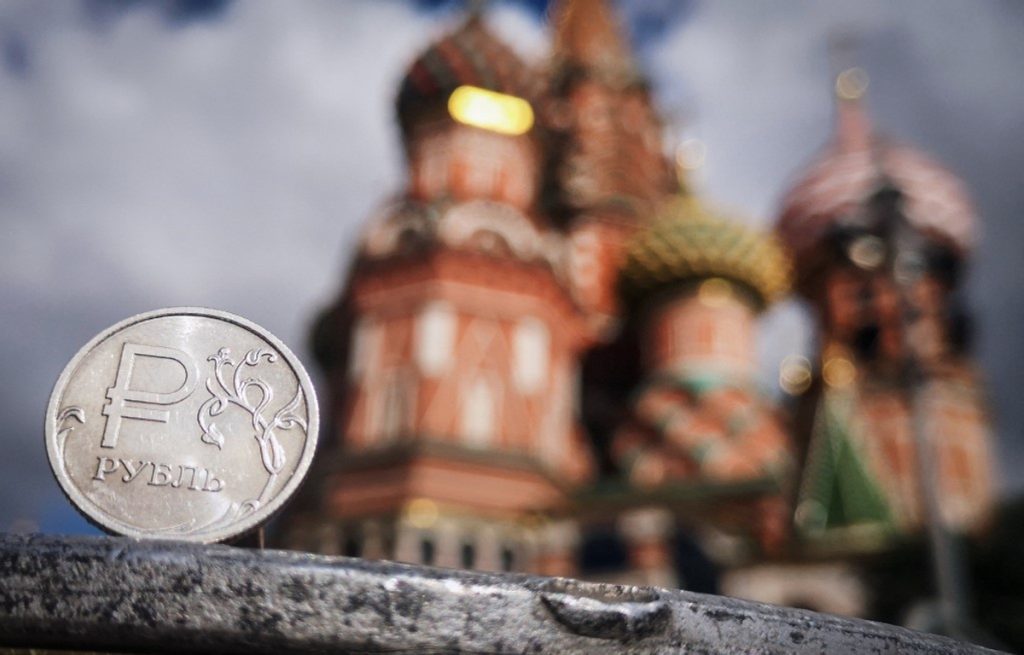
Russia’s financial architecture has quietly crossed into systemic destabilization, with the share of non-performing and toxic assets within the country’s banking system formally breaching the internationally recognized threshold for a full-scale banking crisis.
According to an assessment released by the Foreign Intelligence Service of Ukraine, the data originates from an internal report compiled by Moscow’s own pro-Kremlin Center for Macroeconomic Analysis and Short-Term Forecasting (CMACP).
JOIN US ON TELEGRAM
Follow our coverage of the war on the @Kyivpost_official.
The analytical group, which regularly briefs the Russian government, confirmed that toxic assets have held above the danger line for a third consecutive month.
The IMF crisis threshold
Under data tracking standards established by the International Monetary Fund (IMF), a national financial sector enters a state of systemic crisis when non-performing assets exceed 10% of total banking sector holdings.
The CMACP report emphasizes that the unfolding crisis currently possesses a “latent character”. Because Russia’s financial landscape is entirely dominated by massive state-backed institutions like Sberbank and VTB, regulators have been able to temporarily conceal the structural decay from the public.
By aggressively masking defaults and forcing the artificial restructuring of non-performing corporate loans, state entities have successfully prevented retail panics and bank runs. However, economists warn that this practice merely pushes the liability directly onto the state budget, which is already under immense strain.
Other Topics of Interest
The Third Last Russian Tsar
Putin’s version of Empire is unviable and fast coming to an end as Russia struggles with the dire miscalculation of having invaded Ukraine. Behind the scenes, the latter-day Russian tsar must struggle with factional disputes within the Kremlin and among the oligarchic and security service elites that are continually vying for power, waiting for his demise like underfed vultures.
Stagnation and domestics bad debt in Russia
The distress in the banking corridors directly mirrors a broader, nationwide contraction of Russia’s civilian economy. Despite brief revenue surges driven by inflated global oil prices, the Kremlin has been unable to shield domestic industries from high interest rates and Western sanctions.
The CMACP noted that corporate liquidity is drying up rapidly. Nearly 50% of all registered Russian enterprises cited severe payment delays from corporate partners as their single greatest existential threat heading into mid-2026. This chain reaction of unpaid invoices between contractors has created a massive backlog of default risks that local banks are struggling to absorb.
Leveraging ceasefires for economic relief
The compounding internal duress explains why the Kremlin has increasingly attempted to tie humanitarian or territorial negotiations to financial concessions.
President Volodymyr Zelensky recently warned that Moscow is actively trying to utilize US-brokered backchannel discussions to secure a ceasefire in exchange for targeted sanctions relief. Specifically, Russian emissaries are lobbying for the partial reactivation of the SWIFT global banking network for its major agricultural and state institutions.
For Ukraine, Zelensky warned, allowing the Kremlin access to international capital clearing channels at a time when its domestic banking system is on the brink of structural collapse represents an immense security risk, as it would immediately provide Moscow with the liquidity required to stabilize its internal defaults and prolong the war.