
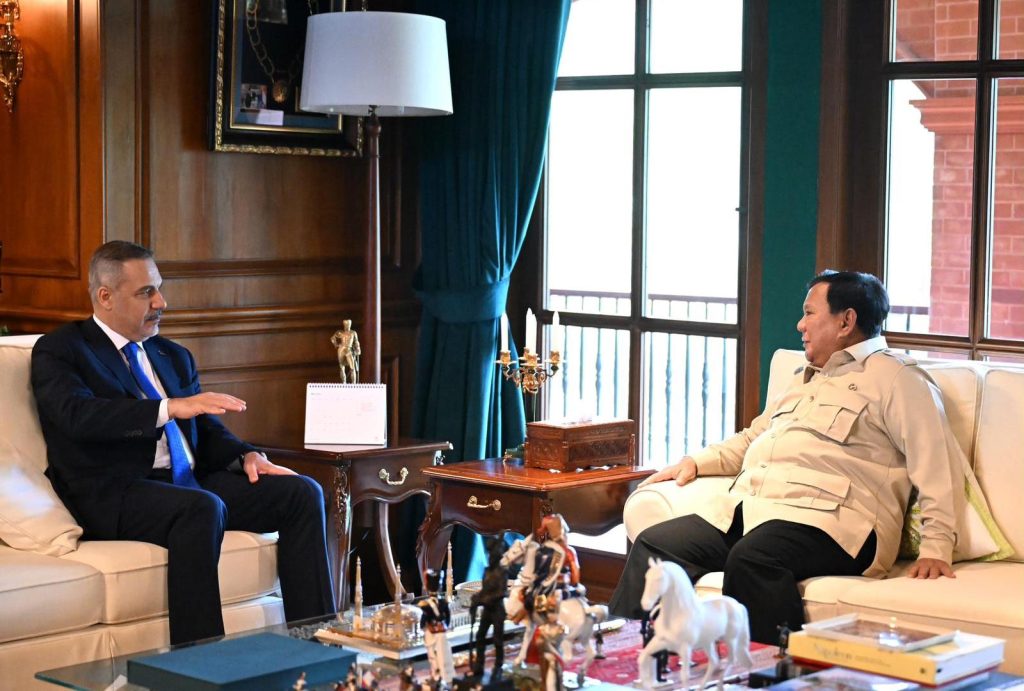
The two discuss a range of sectors, including defence, energy, transportation and the halal food industry.

Published On 3 Jun 2026
Turkish Foreign Minister Hakan Fidan and Indonesian President Prabowo Subianto have held an “extremely productive” meeting in Jakarta as the two countries aim to reach a bilateral trade volume target of $10bn, according to Turkiye’s top diplomat.
The two sides discussed expanding cooperation across a range of sectors, including defence, energy, transportation and the halal food industry, Fidan said on X on Wednesday.
Recommended Stories
list of 3 itemsend of list
“Following our visit to Singapore, our contacts today in Indonesia, our strategic partner, were extremely productive in terms of following up on the multifaceted issues on our agenda,” he wrote.
Fidan said the two countries also “thoroughly evaluated” projects aimed at reaching a bilateral trade volume target of $10bn.
The target was agreed in April last year, when the leaders of the two countries pledged to deepen ties and pursue “new breakthroughs” in bilateral cooperation, according to Turkish media.
For his part, Prabowo expressed appreciation for Turkiye’s support in the repatriation of nine Indonesian citizens who had been abducted by Israel as part of the crackdown on the Global Sumud Flotilla 2.0 humanitarian mission bound for Gaza.
The two sides also exchanged views on developments in the Middle East, with particular attention to Iran and Palestine, according to a statement from Indonesia’s presidency.
“As fellow countries in the Global South, Indonesia and Turkiye share the view that regional stability should be maintained through dialogue, diplomacy and the peaceful resolution of disputes,” the statement said.