
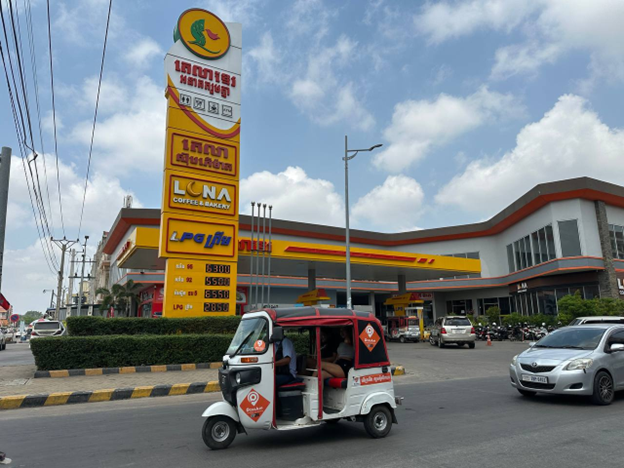
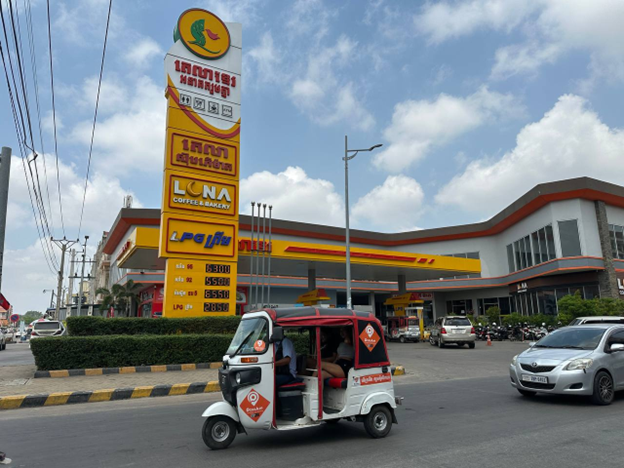
A Tela petrol station in the capital, Phnom Penh. Hin Pisei
Cambodia is working to develop its own oil refinery and crude stockpile by 2029, according to Minster of Mines and Energy Keo Rottanak. The plans were laid out as the Strait of Hormuz remains largely closed to oil tankers due the US and Israel’s war with Iran. Due to the conflict, the price of gasoline continues to increase in Cambodia.
In a march 16 interview with Bloomberg, the minister acknowledged that gasoline prices in Cambodia have increased by more than 30 per cent, while diesel had climbed by more than 60 per cent. He noted that Cambodia has enough fuel supplies for less than 30 days, but is diversifying energy sources.
“The good thing is that we are able to diversify our import sources and they are continuing to provide Cambodia and replenish stock. That’s what we are trying to do. We want to make sure the public do not panic,” he said, adding that the government is sharing the shock with the consumers.
Rottanak said that Cambodia currently generates more than 63 per cent of its energy through methods, with the goal of reaching 70 pe cent clean energy by 2030.
He explained that although Cambodia, like many other nations, is working toward clean energy, it cannot distance its entire from oil and gas any time soon.
“We are working hard to establish a refinery because it will allow us to build a strategic stockpile of crude oil. So far, our stockpile has been centred around petrol, gas and diesel. It’s not the best scenario,” he said.
“We are aware of that, and we are working hard negotiating proposals from the US, China Japan and others to build a refinery and hope that we will be able to do so within the next four or five years,” he added.
The price of regular gasoline in Cambodia increased by another 300 riel, from 5200 to 5500, effective from today, March 17, “until further notice”. The price of diesel has increased slightly, from 6400 riel to 6550.
Currently, prices are highly volatile, as evidenced by the ministry’s setting of new prices within three days of the last announcement.
As of last week, around 400 gasoline stations across the country remained closed due to being unable to purchase petrol from suppliers.