
Experience designing and building machines for underground potash mines has given some Saskatchewan companies an advantage in competing for defence contracts, according to two provincial firms.
“We take the lessons that we learned in other industries and we look how we can apply them to the military standards,” said Derek Dreger, director of defence for Rockford Engineering Works, a Regina-based company that designs and builds heavy equipment.
“[Saskatchewan] has some of the most advanced manufacturing in things like armour, things like aerospace components,” Dreger said.
“Nobody knows that we’re actually providing components to some of the best platforms in the world.”
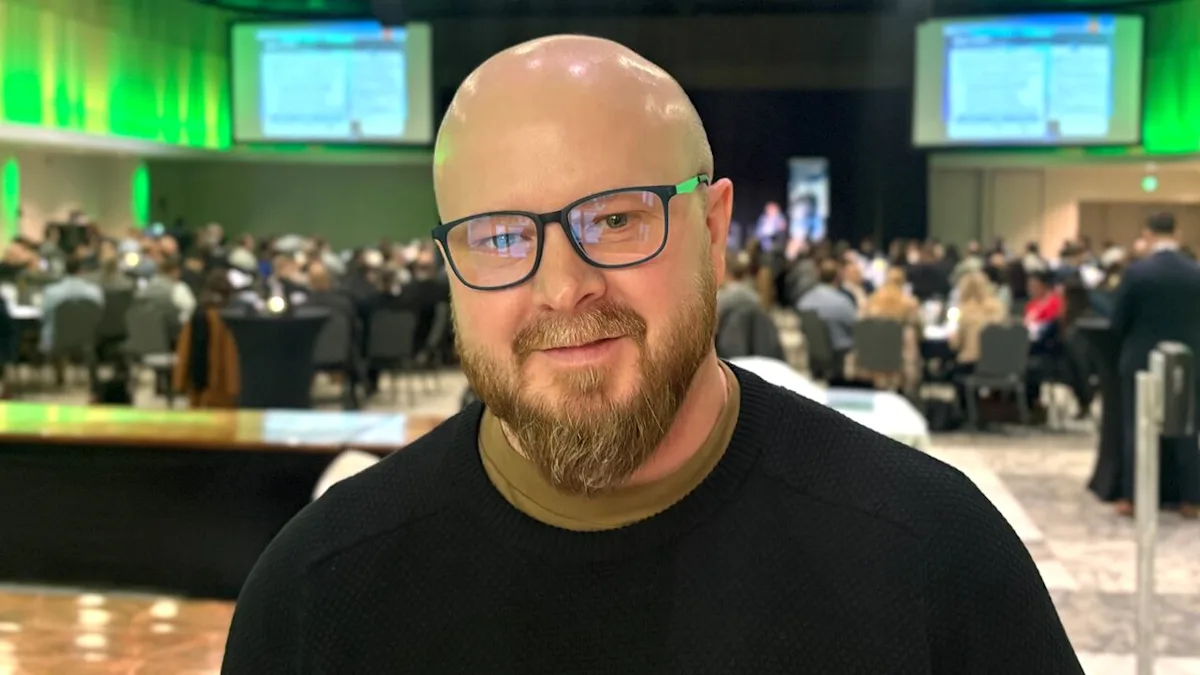
Rockford Engineering and dozens of other Saskatchewan companies were in Saskatoon this week for the ninth annual Saskatchewan Aerospace and Defence Forum, where local companies network with military officials and national defence firms.
This year’s attendance doubled compared to last year. Officials from the federal Department of National Defence and the Canadian military were there, as well as established defence companies such as Raytheon, General Dynamics Land Systems and CAE Inc.
“Mining and other industries that we play in, they’re very heavily demanding environments, all with unique challenges,” Dreger said.
“These hostile environments have a lot of correlation to what we do in the battlefield. So we design for corrosion resistance … a potash mine is a very corrosive environment. Corrosion resistance is something that we look at when we’re designing for a military vehicle because we want it to last.”
This year’s forum had an upbeat tone, due in part to the federal government’s renewed interest in defence spending.
The “Buy Canada” defence industrial strategy announced by Prime Minister Mark Carney last month aims to award 70 per cent of federal defence contracts to domestic companies within a decade, a significant increase from the current 43 per cent.
The strategy could inject $470 billion into the domestic defence supply chain over the next decade, according to the federal government.
Saskatchewan’s $20-billion manufacturing industry employed more than 29,000 people last year and capital investments in manufacturing hit $1 billion in 2025, up 18 per cent over the prior year, according to the provincial government.

(Jeremy Warren/CBC)
Pro Metal Industries, a Regina-based metal fabricator owned by Pasqua First Nation, worked in mining and agriculture before expanding into defence sub-contracting eight years ago, company president Mark Brown said.
“It’s definitely daunting to get into defence,” he said in an interview at the forum.
“It’s highly regulated, with controlled goods, cyber security, quality management standards … lots of barriers to entry. Really be committed and be sure that you want to get into defence because it can be expensive to get into the industry.”
Brown said Saskatchewan can benefit from Ottawa’s defence spending spree and agreed that high-precision manufacturing expertise translates across industries.
“We’re a company based in Saskatchewan and we’re building for marine ships,” Brown said.
The forum alternates between Saskatoon and Regina every year and is organized by the provincial government and the Saskatchewan Trade and Export Partnership.