
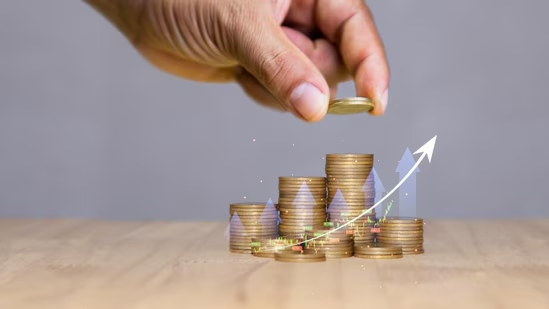
People don’t need to track economic reports to understand inflation. They feel it when everyday expenses rise. Food costs more. Transport costs more. Even small purchases feel heavier on household budgets. Over time, this makes one wonder if money is slowly losing value.

Inflation simply means money does not buy the same things it used to. That sounds worrying, but it does not mean people are doing something wrong. It just means the environment around money has changed. And when the environment changes, the approach needs to be adapted.
The good news is that individuals are not out of options. They can still protect their money. They just need to understand where savings accounts fit in today’s world.
Why Saving Is Still Important in 2026
Some people think saving money during inflation is pointless. That belief can hurt more than inflation itself. Saving is not about beating inflation. It is about staying prepared, calm, and financially stable.
People still need emergency funds. They still need money that can be accessed instantly. A cushion is still needed for short-term goals. Inflation does not remove these needs. In fact, it makes them more important.
This is why banks continue to improve their everyday banking products. Institutions like IDFC FIRST Bank focus on making savings simple and transparent for customers who prefer straightforward banking services..
The Real Role of a Savings Account Today
A savings account is not meant to make one rich overnight. It is meant to hold money while keeping it accessible. That role has not changed, even in 2026. A salary usually lands here. An emergency fund stays here. Short-term plans depend on it. That makes a savings account an important part of many people’s financial planning.
When the base is stable, everything else can feel easier. There is less worry and better planning. Panic-led decisions can be avoided during uncertain times. A savings account offers safety, flexibility, and steady growth. Customers don’t need advanced knowledge to use it well. They just need consistency.
How Interest Rates Help Balance Inflation
Inflation reduces value. Interest adds value. That is the basic relationship between the two. When money earns interest, it does not sit idle. It works in the background.
This is where choosing the right savings account interest rate becomes important. Even a small difference in interest can matter when funds stay parked for longer periods. Compounding helps balance grow over time.
Interest will not cancel inflation completely. But it can help soften the impact. And that matters when prices keep rising. Modern banks make this easier to track. One can see interest credits, monitor balances anytime and stay informed.
Why Bank Choice Makes a Difference
Not all savings accounts are the same. Some offer better digital access. Some provide clearer communication. Others focus on practical features.
Banks like IDFC FIRST Bank aim to simplify banking for everyday users. Customers don’t need to decode complex terms or constantly check the fine print. The focus stays on clarity and ease.
When banking feels simple, customers stay more disciplined. And discipline matters more than timing.
Can Savings Accounts Preserve Wealth in 2026?
Savings accounts alone may not grow wealth. But they support stability. And stability is a form of wealth. In 2026, inflation will continue to exist. Interest rates will change. Markets will fluctuate. But consumers’ need for safe, accessible money will remain constant.
Savings accounts can act as a financial anchor. They hold money securely, allow balances to grow and support broader financial plans. Saving is not about complexity. It is about clarity, balance, and consistency. And savings accounts continue to serve that role.
Note to the Reader: This article is part of Hindustan Times’ promotional consumer connect initiative and is independently created by the brand. Hindustan Times assumes no editorial responsibility for the content.