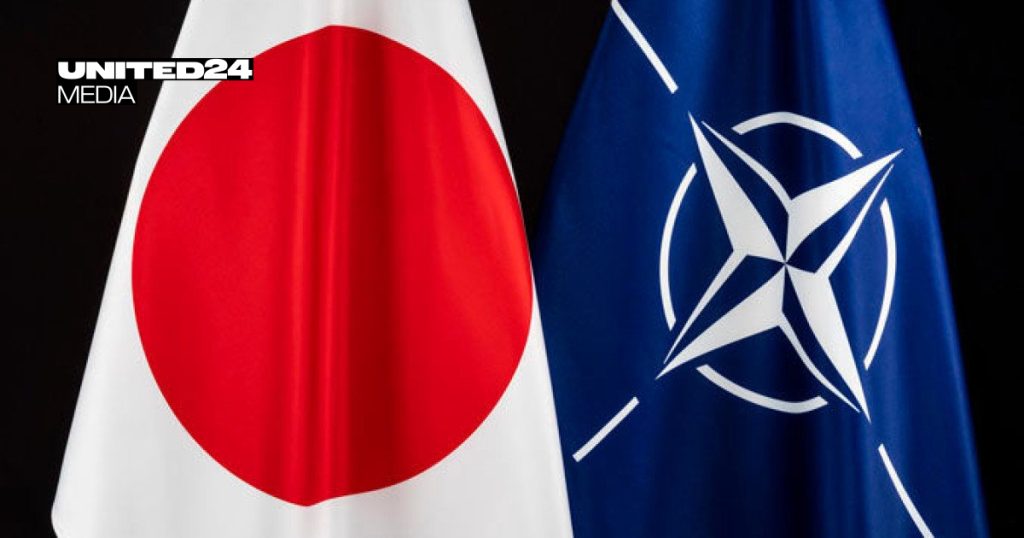
Japan will send Self-Defense Forces officers to NATO’s Ukraine support command in Germany for the first time, the Japanese Defense Ministry announced, according to The Japan Times on May 29.
The deployment marks another step in Tokyo’s deepening defense cooperation with NATO as Russia’s war against Ukraine continues to reshape security policy far beyond Europe.
We bring you stories from the ground. Your support keeps our team in the field.
Japan will dispatch four Self-Defense Forces officers to the NATO Security Assistance and Training for Ukraine mission, known as NSATU. The command is headquartered in Wiesbaden, Germany, and was launched in July 2024 to coordinate military aid deliveries and training for Ukrainian forces.
The officers will include two representatives from Japan’s Ground Self-Defense Force, one from the Air Self-Defense Force, and one from the Maritime Self-Defense Force.
They will help coordinate the provision of equipment and training for Ukraine’s military and serve as liaisons with partner countries. The Japanese Defense Ministry stressed that the officers will not take part in combat operations.
“This dispatch will contribute to strengthening Japan’s own defense posture by learning lessons from Ukraine, including those regarding ‘new ways of fighting,’ while also deepening cooperation between Japan and NATO, given that security in the European-Atlantic and Indo-Pacific regions is inextricably linked,” the ministry said in a statement.
NSATU may include up to 700 personnel and serves as a central NATO structure for planning, coordinating, and arranging military assistance to Ukraine following Russia’s full-scale invasion.
Tokyo first expressed interest in joining the mission in April 2025, when then-Defense Minister Gen Nakatani discussed the issue with NATO Secretary General Mark Rutte.
The move reflects Japan’s broader shift toward closer military cooperation with Western partners. In recent years, Tokyo has eased some of its long-standing restrictions on defense exports, a major change for a country that for decades maintained a tightly limited postwar security posture.
Those changes were approved by Japan’s Cabinet and National Security Council and represent one of the country’s most significant defense policy revisions since the end of World War II.
Japan may also join the Prioritized Ukraine Requirements List, or PURL, a mechanism through which allies finance the purchase of US weapons and equipment for Ukraine, according to the Japan Times. Under that framework, Ukraine receives critical systems, including missiles for Patriot air defense batteries.
For Japan, the decision to send officers to NSATU is not only about supporting Ukraine. It is also about studying how modern warfare is changing—from drones and air defense to battlefield coordination—and applying those lessons to Japan’s own security planning in the Indo-Pacific.
Earlier, Japanese drone company Terra Drone secured its first defense contract with Japan’s Ministry of Defense after winning a public tender to supply 300 domestically produced modular unmanned aerial vehicles.