
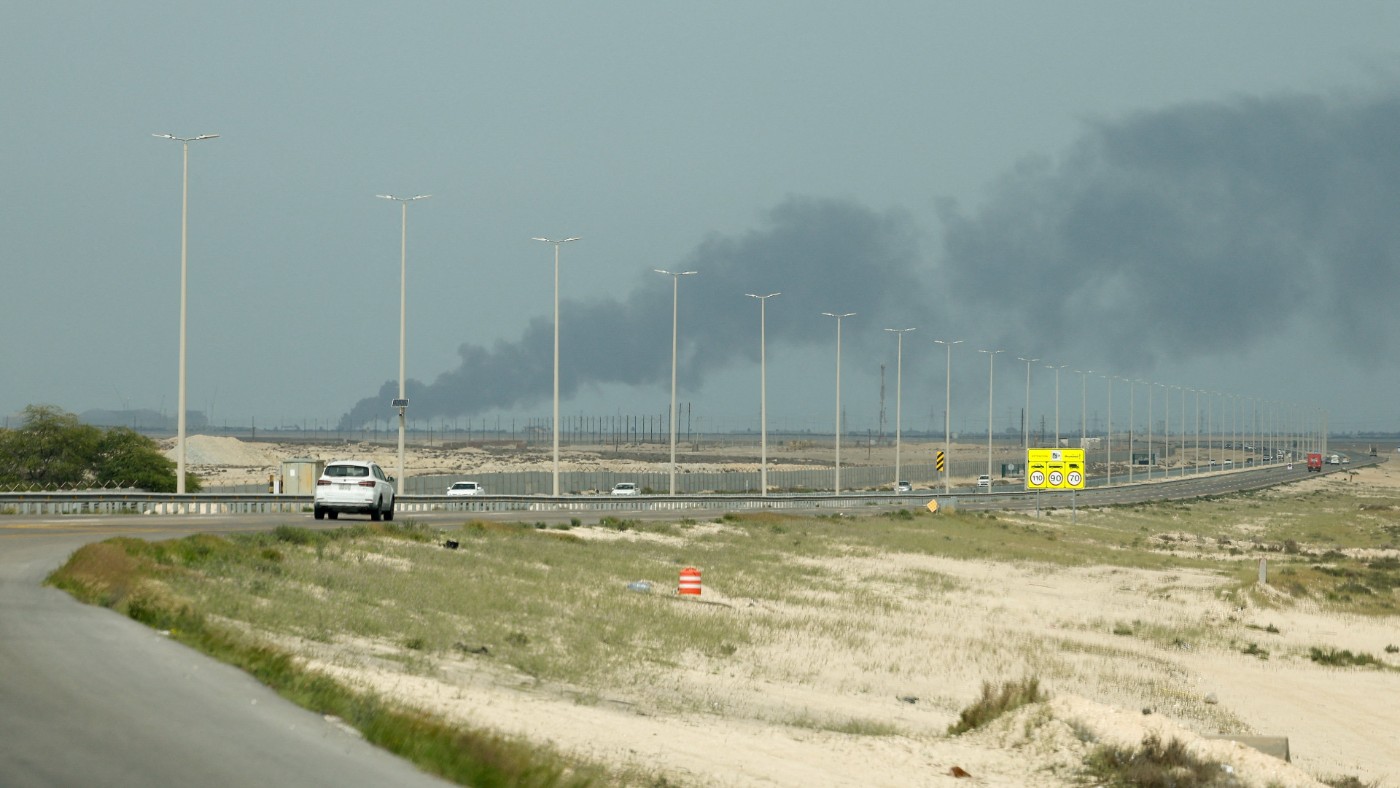
European gas prices soared almost 50 percent after Iranian strikes prompted Saudi Arabia to close its biggest oil refinery and Qatar to halt the production of liquefied natural gas (LNG).
Iran, responding to US and Israeli attacks launched on Saturday morning, has disrupted energy infrastructure across the Middle East.
Saudi Arabia’s state-owned oil and gas company, Saudi Aramco, shut as a precautionary measure its Ras Tanura refinery on Monday after drone strikes caused a fire there.
The 550,000 barrels per day (bpd) refinery, which is part of an energy complex on the kingdom’s Gulf coast, also serves as a critical export terminal for Saudi crude oil.
Two Iranian drones struck energy facilities in the Qatari industrial city of Ras Laffan and Mesaieed, according to Qatar’s defence ministry.
New MEE newsletter: Jerusalem Dispatch
Sign up to get the latest insights and analysis on
Israel-Palestine, alongside Turkey Unpacked and other MEE newsletters
No casualties were reported, but Qatar Energy, the largest LNG producer in the world, announced that it had stopped production of LNG and associated products.
The state-run company operates 14 liquefied natural gas trains with a total annual production capacity of 77 million tonnes.
Ras Laffan Industrial City is the world’s largest exporter of LNG and hosts the infrastructure for the North Field, the world’s largest non-associated natural gas field.
In Iraqi Kurdistan, which exported 200,000 bpd of oil via a pipeline to Turkey’s Ceyhan port in February, companies including Norwegian oil and gas operator DNO ASA, Gulf Keystone Petroleum, Dana Gas and HKN Energy have stopped output at their fields as a precaution, with no damage reported.
The Israeli government has instructed Chevron to temporarily shut down its vast Leviathan gas field, where the US energy giant has been expanding capacity to around 21 billion cubic metres a year as part of a $45bn export deal to Egypt.
A spokesperson for Chevron, which also operates the Tamar gas field off Israel’s coast, told Reuters its facilities were safe.
Oil prices soar
Iran has denied targeting energy infrastructure. Its own facilities have also been impacted.
Explosions were heard on Saturday on Iran’s Kharg Island, which processes around 90 percent of the Islamic Republic’s crude exports. It was unclear how the facilities were impacted, Reuters reported.
Iran is the third-largest producer in the Organisation of the Petroleum Exporting Countries (Opec), accounting for about 4.5 percent of global oil supplies, while Saudi Arabia is the largest.

On Monday, oil prices surged 13 percent to above $82 a barrel, the highest since January 2025, as shipping stopped at – or turned away from – the Strait of Hormuz, through which about a fifth of the world’s oil supply flows.
At least 150 vessels, including oil and LNG tankers, had dropped anchor in the Strait of Hormuz and surrounding waters, shipping data showed on Sunday.
A projectile hit the Marshall Islands-flagged product tanker MKD VYOM on Sunday, killing a crew member as the vessel sailed off the coast of Oman, its manager said. Two other tankers were also damaged.
Also on Sunday, a projectile hit the Gibraltar-flagged oil bunkering tanker Hercules Star off the UAE coast, manager Peninsula said in a statement.
As a result of the incidents, marine insurers are cancelling war risk coverage for vessels and oil shipping rates are set to surge further.