
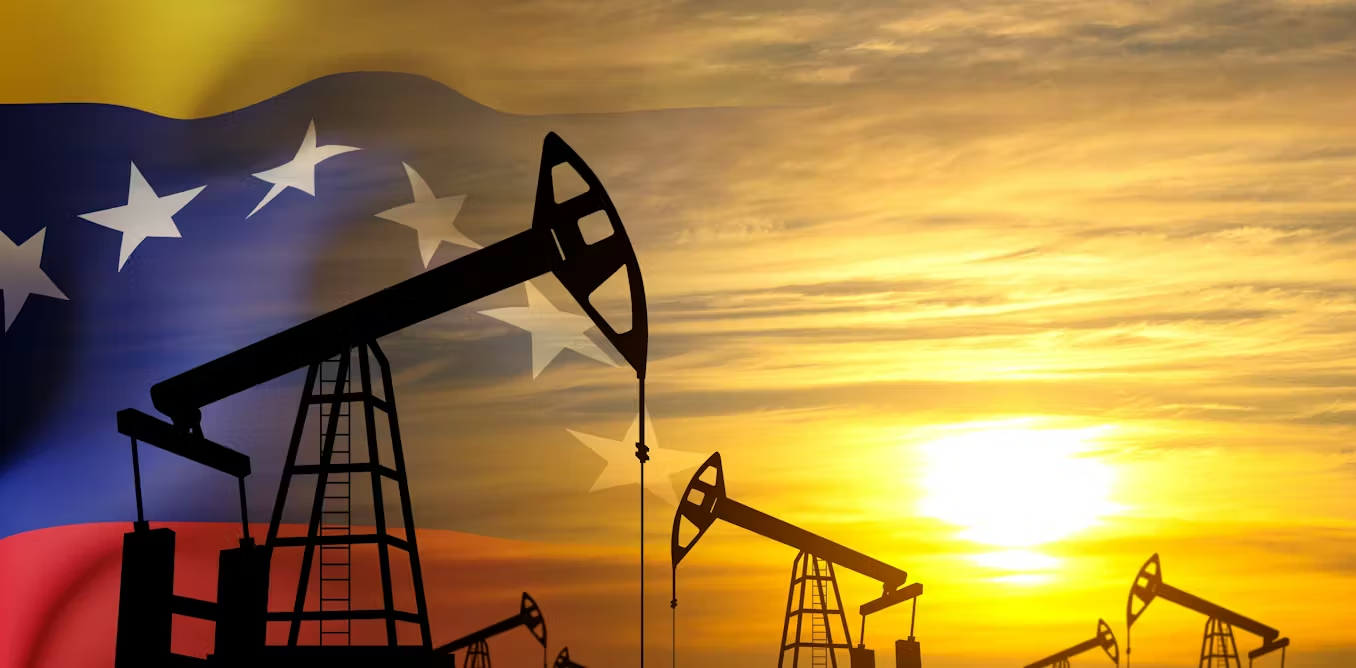
After the US captured Venezuela’s president at the start of 2026, Donald Trump promised to “unleash” the country’s oil supply. He wanted companies to invest US$100 billion (£74 billion) to get hold of it.
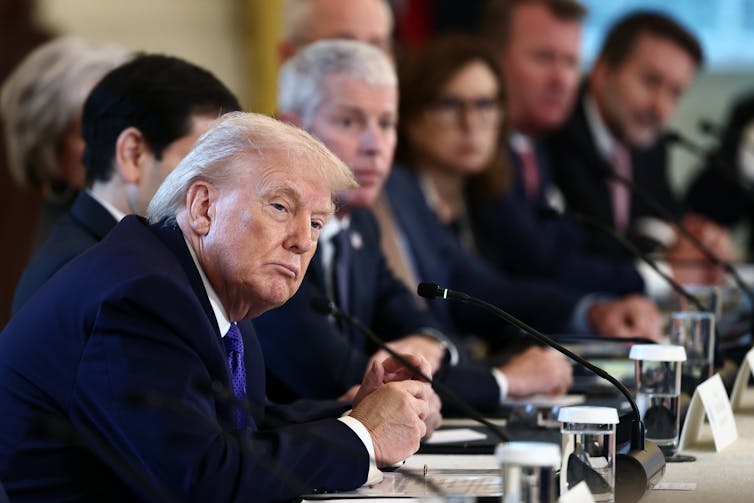
Big oil though, seems less than keen on that idea, appearing to consider Venezuela too expensive or risky. Exxon Mobil’s unenthusiastic response, describing Venezuela as “uninvestible”, even earned a personal rebuke from Trump.
So maybe Trump misunderstood how big oil works, and thought of oil firms as the quintessential risk takers – the ultimate exploiters of uncertainty. Perhaps he had in mind Daniel Day Lewis’s character in the film There Will be Blood, who was willing to risk everything to get his hands of more of the black stuff.
But while that may have been true for some oil firms in the early 1900s, in the 21st century, nothing could be further from the truth. Big oil in 2026 does not like uncertainty. It prefers to invest in what it knows, like plastics and petrochemicals. It does not want to get involved with things as uncertain as Venezuela and green energy.
This idea is backed by my own research on the international oil industry, which shows that large oil companies tend to base their business strategies on long term oil production.
And South American countries play only a minor role in this outlook. Instead, big oil is focused on two key areas: shale oil in the US, and expanding petrochemical production in Asia.
The low cost of shale oil extraction gives it significant cost advantages as a raw material for refineries, while Asia’s growing share of global manufacturing provides a growth market for petrochemicals.
This in turn is linked to oil companies seeking to exploit growing demand for plastics (and lower demand for transport fuels) as part of a clear and long term path to profit. That path is what matters most to oil companies, and Trump’s plan for Venezuela (nor the green transition for that matter) does not provide it.
The priority of profit is also the reason why governments who want greener or cheaper energy cannot rely on powerful oil companies to help them out.
Strength in oil
Underpinning the oil industry’s extreme strength in the global economy is its captive market, where consumer choice is limited to a small number of producers. In the case of the oil market, those consumers are nation states. And even those with large oil reserves of their own need the companies’ technology to refine it.
Venezuela’s oil reserves were once part of this international captive market. But research has shown that not oil is equal. And the range of products which can be manufactured from a barrel of it depends on a mix of geological characteristics and technical capabilities.
EPA/JIM LO SCALZO / POOL
So while Venezuela produces more crude oil then it consumes, it needs to import fuels and petrochemicals to meet the needs of its economy. This is because it lacks the refineries to produce these products domestically.
International companies in the oil refining and services sectors control key technology and intellectual property in this area. Without their participation, Venezuela’s crude will remain unsuitable for international refineries.
This fundamental inequality around access to advanced refining technology means there is little relationship between a country’s oil reserves and whether or not it needs to import oil products.
Big oil may yet decide to stump up the investment required to open Venezuela’s oil industry if suitable guarantees are provided. But such state sponsored access places the risk with tax-payers, when those kind of guarantees could be better deployed in the development of clean energy.
And while society needs large firms to invest, politicians need to direct this investment towards productive opportunities. More cheap oil, petrochemicals and plastics are not the answer.
Governments need to recognise that the problem with oil companies is not that they take too many risks, but rather that they take insufficient risks in areas where investment is needed most. For as my research also shows, the retreat of the oil companies from green investment has been matched by a ramping up of their investment in high emission and heavily polluting plastics and petrochemicals.
Addressing this will not be easy. It will requires strong supranational coordination among states to influence the sector, by increasing the costs of oil production and limiting the construction of new infrastructure. But that’s a very different approach to trying to “unleash” the oil supply of a whole nation.