
ASEAN moves to prevent hoarding, explore alternative energy sources
Editor’s note: In this weekly feature China Daily gives voice to Asia and its people. The stories presented come mainly from the Asia News Network (ANN), of which China Daily is among its 20 leading titles.
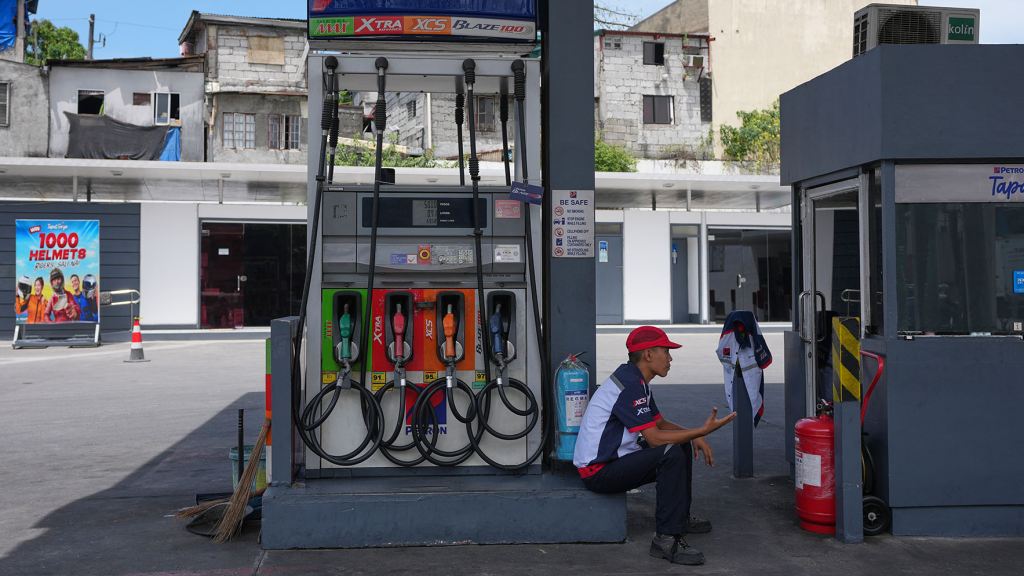
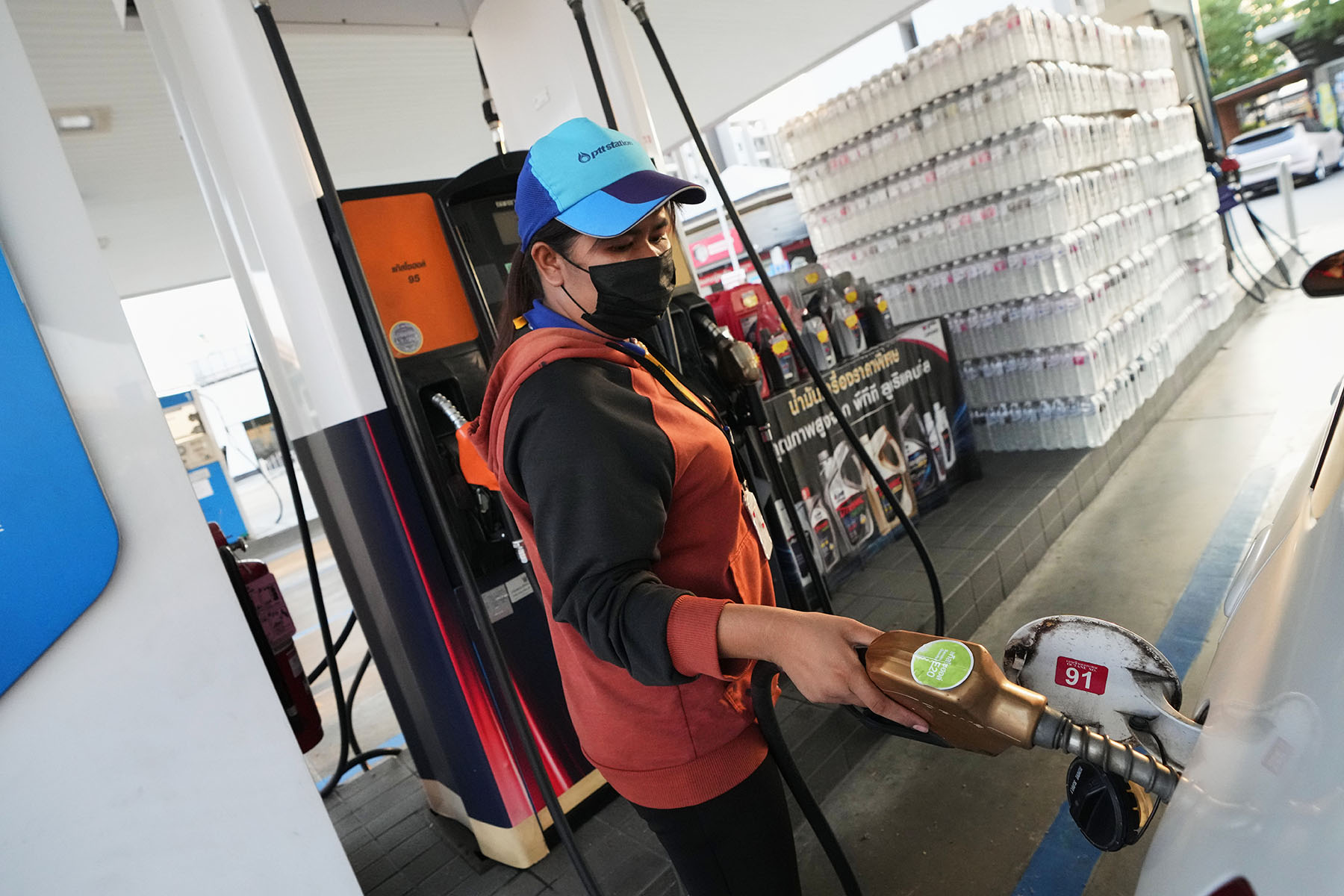
As crude prices soar amid Middle East conflict destabilizing the global supply chain, ASEAN governments have prioritized a singular mission: preventing collective “panic hoarding” while intensifying the search for alternative energy sources to secure national supplies.
In Thailand, authorities have already seized over 57 million liters of smuggled fuel. Prime Minister Anutin Charnvirakul publicly condemned these acts as a primary driver of national shortages.
Similarly, Myanmar’s military government has threatened imprisonment for anyone carrying more than 180 liters of gasoline without a permit.
Meanwhile, the governments of Indonesia, Malaysia, and Vietnam have stepped up enforcement against smuggling while repeatedly reassuring the public that supplies remain stable.
READ MORE: SE. Asia seeks domestic fuels amid energy crunch
Radityo Priyasmoro, a resident of Jakarta, recalled a recent day when long lines at gas stations lasted from morning until midnight following price hike rumors.
Although the Indonesian government has maintained subsidies through 2026, Radityo remains cautious.
With a population of 280 million, Indonesia consumes 1.6 million barrels of oil daily, yet its official reserves last less than 30 days.
“I’ll be more careful with spending — switching to a bicycle or public transport unless necessary,” he said.
In Vietnam, Doan Minh Anh has shifted to working from home and using electric scooters to save on costs.
“Our family of four used to have four motorcycles. Since Hanoi plans to implement ‘Low Emission Zones’, we sold one fuel-powered motorcycle for an electric one,” she said.
The regional crisis was triggered on Feb 28, after joint US-Israeli strikes on Iran led to the blockade of the Strait of Hormuz. This 33-kilometer-wide choke point handles 25 percent of global seaborne oil.
Currently, the daily traffic has plummeted to just 15-20 ships, down from the usual 120.
Julia Goh, senior economist at United Overseas Bank Malaysia, told Sin Chew Daily that even if the strait were to reopen tomorrow, the rerouting of tankers, inventory depletion, and insurance market volatility would take months to stabilize.
“The geopolitical risk premium will not simply disappear; it will be permanently factored back into energy prices,” she warned.
Goh analyzed that the crisis is creating a “domino effect”.
First, it triggers cost-push inflation, driving up the costs of transport, food, and manufacturing.
Subsequently, fuel surcharges and contract risk premiums rise, bloating logistics costs and compressing consumer purchasing power.
“We are not merely approaching a crisis; we are already in the midst of one,” Goh stated.
“The closure of the Strait of Hormuz is no longer just a ‘tail risk’; our baseline assumptions must now be adjusted.”
She predicts a global trade slowdown as the world enters a phase of higher baseline costs and persistent uncertainty.
Fuel-dependent road transport serves as the economic “lifeblood” of the region.
Goh believes that for most households in nations like Vietnam, Indonesia, and the Philippines — which rely heavily on motorcycles and trucks — shifting to rail or public transport in the short term is unrealistic.
For low-income households spending 40 to 50 percent of their income on food and transport, there is very little room to “breathe”.
“The buffering capacity varies significantly,” she noted.
“Singapore has fiscal reserves; Malaysia has upstream production and subsidies. In contrast, the Philippines, Cambodia, and Vietnam face tight reserves and high import dependency, leaving their citizens with much less resilience.”
On March 24, the Philippines became the first ASEAN nation to declare a one-year “National Energy Emergency,” activating a 20-billion-peso ($330 million) fuel fund.
The country relies on the Middle East for 95 percent of its oil.
The impact on agriculture is devastating. A 57-year-old farmer told Reuters he is letting his crops rot in the field because harvesting and transport costs exceed the selling price.
In Cambodia, fuel prices have surged 70 percent, and daily expenses for city residents have jumped by 50 percent.
Tuk-tuk fares have risen sharply, pushing rural residents back to traditional energy sources such as charcoal, while those in urban areas are switching to tax-free Chinese electric vehicles.
Despite being an oil and gas producer, Malaysia remains vulnerable, depending on the Middle East for 69 percent of its oil imports.
Tan Sri Tengku Muhammad Taufik, president and Group CEO of Petronas, noted that shipping costs through the Strait of Hormuz have tripled.
“Our crude production is naturally declining — from a peak of 700,000 barrels per day to about 350,000 now,” he said.
For locals like Lee Chun Seng, 30, an electronics salesman in Selangor, the removal of subsidies has pushed his monthly fuel bill from RM717($181) to over RM1,038.
“I have to find a way out,” he said.
“In the long run, solar power and EVs are the only way to save money.”
Urgent needs
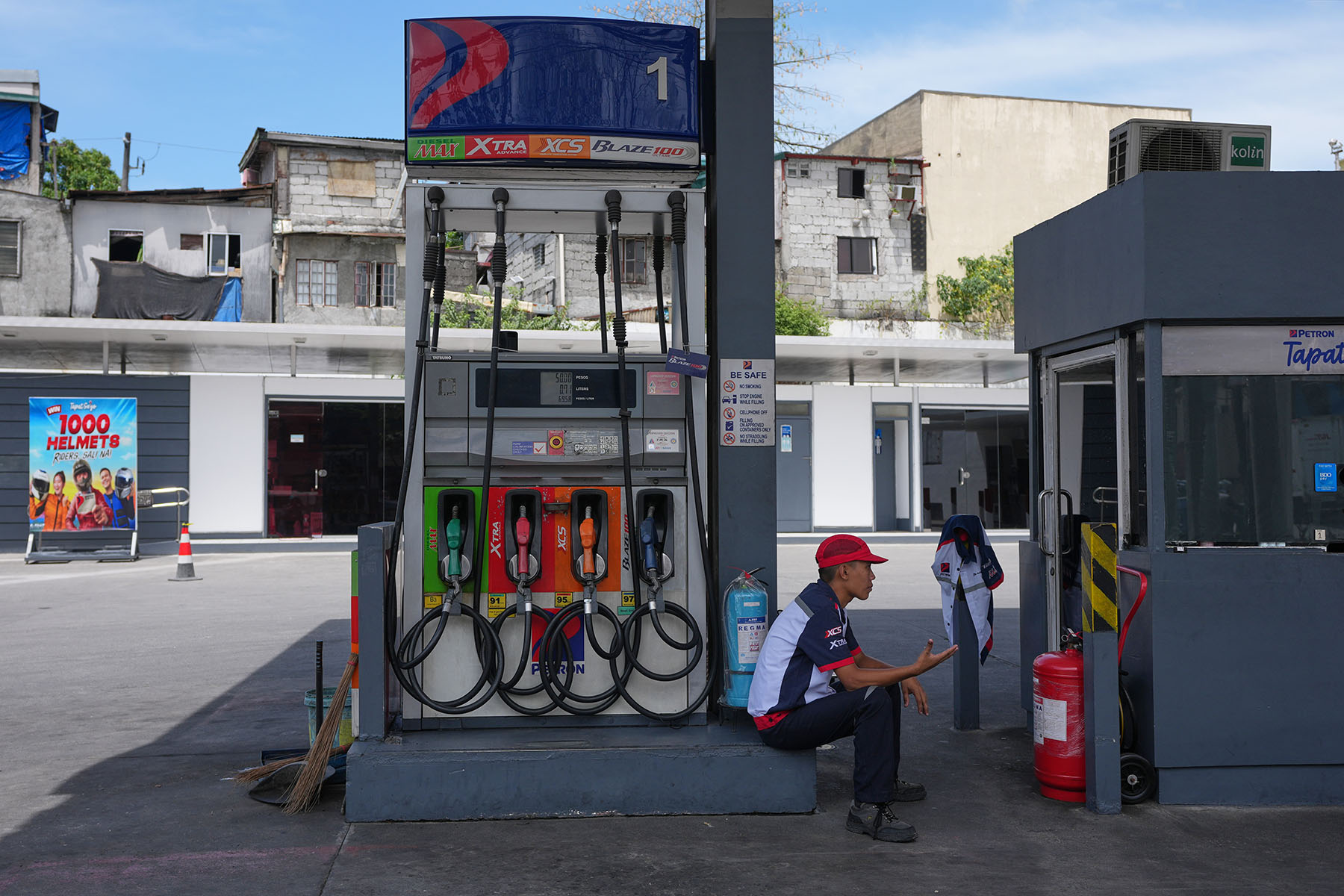
As Southeast Asia seeks new sources of energy, several countries turn to non-Middle Eastern alternatives for their fuel supply, with many turning to Russian crude oil.
To alleviate energy shortages and ensure long-term security, the Philippines, Indonesia, Thailand, and Vietnam are increasingly looking toward Russia.
Notably, the Philippines, a longtime US ally, has imported Russian crude for the first time in five years.
Vietnam has also officially met with Russian energy representatives to sign agreements for nuclear power plant construction in exchange for long-term energy guarantees.
Approximately, 85 percent of Vietnam’s crude oil originates from Kuwait. With the Strait of Hormuz facing disruptions, Vietnam immediately sought aid from East Asian countries, while contacting the UAE, Qatar, and Angola for alternatives.
Le Hong Hiep, a senior fellow at the ISEAS-Yusof Ishak Institute, noted that this crisis exposes significant vulnerabilities in Vietnam’s energy security and complicates its delicate balancing act between major world powers.
International relations scholar Tang Shixuan analyzed that Southeast Asia’s vulnerability stems largely from low Strategic Petroleum Reserve.
The current strategic reserves for Vietnam stand at less than 20 days, Indonesia at about 25 days, and the Philippines at 60 days.
Tang explained that Southeast Asia lacks the massive infrastructure and fiscal resources required to maintain larger reserves.
Building storage networks and logistics systems requires years of planning and billions in investment, which remains out of reach for many ASEAN members.
In comparison, East Asian economies maintain better storage capacity despite their heavy dependence on Middle Eastern supply.
While the ASEAN Petroleum Security Agreement exists, Julia Goh noted it has never faced a large-scale “pressure test”.
The agreement’s Coordinated Emergency Response Mechanism, or CERM, allows members to voluntarily supply 10 percent of a neighbor’s oil needs during a crisis.
“The voluntary nature is a fundamental flaw,” Goh said.
ALSO READ: Asia-Pacific reels from soaring energy prices
“In a true supply crisis, nations will prioritize domestic needs over regional solidarity. CERM is more of a trust-building framework than a functional emergency tool.”
Tang agreed that in times of geopolitical tension, energy is frequently used as a strategic tool to squeeze rivals’ financial capacities.
He likened the current Strait of Hormuz crisis to the 1970s oil crisis, suggesting it could be a turning point for global energy structures.
Tang said that if ASEAN nations simply shift their dependence from the Middle East to a single source like Russia or the US, they aren’t reducing risk — they are merely “transferring dependence”.
Elbinsar Purba, a visiting fellow at the ISEAS-Yusof Ishak Institute, wrote in an analysis at the Asialink website that “the current strategies focus largely on stopgap measures to avoid supply shortages and minimize price surges. While certain short-term interventions are needed, Southeast Asian nations risk falling into deeper vulnerability if they do not undertake bold transformations of their energy architectures”.
He said ASEAN should expedite the deployment of renewable energy. Beyond aspirational goals, it is time for ASEAN to explore enforceable, feasible and viable renewable energy commitments. Lastly, efforts must be stepped up to promote cross-border electricity trade among ASEAN countries.