
It was Lewis Mumford, the seminal American urban historian and philosopher, who once described the modern city as “a theatre of social action”. If a city’s buildings, businesses, parks and homes provide a backdrop for its human actors, then transport is what allows them to go from scene to scene.
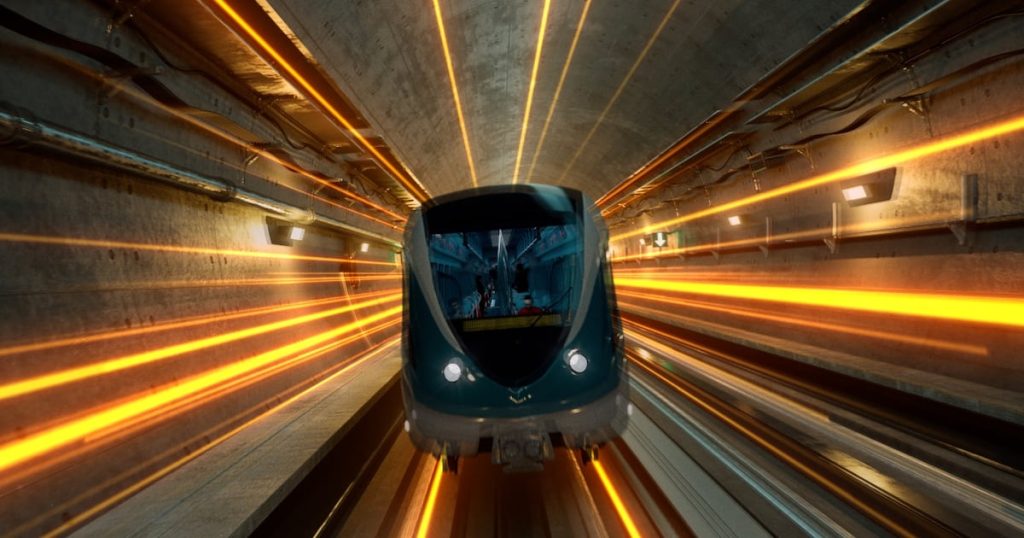
From the daily commute to work, journeys to keep appointments or just to meet friends, getting from A to B is the lifeblood of any vibrant metropolis. With the recent news that a new Dh34 billion ($9 billion) Metro Gold Line is planned for Dubai, the Middle East’s fastest growing city is knitting its neighbourhoods together, reducing car dependency and changing social attitudes to mass public transit all at the same time.
The project certainly does not lack ambition. The Gold Line’s 42km route will extend the length of the existing network by a further 35 per cent and is due to open on September 9, 2032 – 23 years to the day since the launch of Dubai Metro in 2009. Trains passing through its 18 stations will serve more than 1.5 million residents, travel through 15 key areas of the city and connect to dozens of real-estate developments, as well as the coming Etihad Rail passenger train services.
In fact, the Gold Line is just one of two major expansions planned for Dubai Metro. The Dh20.5 billion Blue Line is set to launch in September 2029; its 14 stations will connect with the network’s Green and Red lines, and serve expanding neighbourhoods such as Mirdif, Dubai Silicon Oasis, Dubai Creek Harbour and Dubai International City.
These megaprojects are catching experts’ attention. Dr Alexandra Gomes, a research fellow at the London School of Economics who has analysed Gulf transport and urban planning, told The National that investing in mass rail systems could decrease car use, support sustainable development, reduce deaths and lower emissions.
The work of revolutionising a city’s transport networks – and overturning old assumptions – looks set to continue apace
Given this, a cleaner, greener city with affordable and efficient public transport is an ambition worth fulfilling. As Dubai continues to attract new residents from around the world, with many of them putting down roots in the city, mass transit is a place where people from different walks of life will come together.
The cliche that Dubai’s buses and Metro system are the preserve of the city’s lower-income workforces is becoming increasingly outdated. As with other leading financial hubs, such as London or Singapore, it is increasingly likely that a seasoned employee of one of the city’s financial institutions will share their journey with an intern who works in the same building.
In Dubai, the work of revolutionising a city’s transport networks – and overturning old assumptions – looks set to continue apace.