
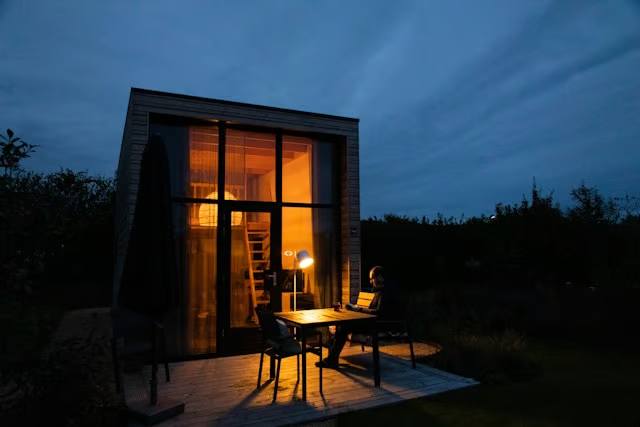
A chattel mortgage is a type of loan used for financing movable personal property.
With the tiny house boom and increasing interest in small, mobile housing comes a unique funding opportunity of a chattel mortgage. While these mortgages are not new, they are used to purchase movable property in which the owner doesn’t own the land under the property. Chattel loans are used for manufactured, mobile or tiny homes as well as heavy equipment used in businesses. Read on to understand these unique mortgages and how you could use them.
Understanding Chattel Mortgages
A chattel mortgage is a specialized loan for movable property that does not qualify for a traditional mortgage.
Both individuals and businesses use chattel loans. These mortgages are applied to movable property, which is used as collateral for the loan. For that reason, chattel loans are secured loans. They often have higher interest rates than traditional mortgages.
When mobile homes are set on leased land, they are financed using chattel mortgages. In some cases, mobile homes that don’t meet lenders’ price minimum can also be financed with a chattel.
One key difference between chattel and traditional mortgages is the loan terms. Common loan terms for chattel loans are usually between one and seven years.
Also, with a chattel loan, the lender owns the property until the borrower has fully paid the loan. With a regular mortgage, the lender holds a lien on the property but isn’t the owner. In that case, the lender can take possession of it in the event of a default.
Similar to traditional mortgages, chattel loan interest rates can be fixed or variable. Fixed chattel loans can resemble fixed-rate home loans, except for the variable interest rates.
However, unlike a traditional mortgage, a chattel only pertains to “personal movable property.” The mobile home, construction equipment or other movable property is collateral. The loan stays until it is paid off, even if the mobile home is moved to another plot of land.
When the loan is paid off, the borrower assumes outright ownership of the chattel asset. Chattel mortgages carry some of the benefits of a traditional mortgage. For example, businesses that use chattel loans to purchase equipment can usually claim interest on loans and depreciation for tax purposes.
Types of Chattel Mortgages
The most common types of chattel mortgages relate to mobile, tiny or manufactured homes and equipment. Here’s what you should know about each.
Manufactured/Mobile Home Loans
Manufactured or mobile homes are manufactured in a factory according to building codes set by the U.S. Department of Housing and Urban Development (HUD). These homes are transported to a home site and installed on temporary or permanent foundations. Mobile homes officially refer to manufactured homes made before 1976.
Manufactured homes come in three common sizes:
- Single-wide: This is a home built in one long section.
- Double-wide: Two sections are joined to make a larger home, giving owners a larger living space.
- Triple-wide: While this is the least common, a triple-side joins three single-wide sections together for a larger home.
In addition to standard manufactured homes, the increased interest in tiny homes and government incentives to build them means that more homebuyers are considering tiny homes as an alternative to manufactured homes.
You can use a chattel loan to finance manufactured homes or tiny houses on leased land. The manufactured home is considered personal movable property and acts as security for a chattel mortgage. If you move the manufactured or tiny home to a new location, the financing arrangement remains in effect. Need help finding options? Find the best mortgage lenders for manufactured homes or tiny homes.
Equipment Loans
Equipment chattel loans are a common business expense for companies that need to purchase heavy equipment for construction, farming, transportation or other purposes. A chattel allows the business to buy and use the equipment while the lender retains ownership until the loan is paid off. The equipment acts as collateral, and the lender can repossess the equipment in case the borrower defaults.
You can find solutions for low-cost financing for business-related equipment from the U.S. Small Business Administration (SBA). Instead of issuing the loans directly, the SBA guarantees eligible loans from an approved list of commercial lenders, helping small businesses to purchase machinery and equipment.
Chattel Mortgage vs. Traditional Mortgage
There are a few key differences between chattel mortgages and traditional mortgages, namely:
- Ownership: In the case of chattel, the lender owns the property until the loan is paid off in full. With a traditional mortgage, the borrower owns the property and the lender holds a lien.
- Interest rates: Chattels generally have higher rates than traditional ones, so it’s even more important to shop around to find the best rates available.
- Repayment terms: Chattels usually have shorter repayment terms than traditional mortgages, so you might have to make higher monthly payments.
- Consumer protections: Chattels have fewer consumer protections than regular mortgages
Pros and Cons
Chattel mortgages are a good solution if you’re purchasing a property that doesn’t qualify for a traditional mortgage. However, it comes with a few distinct disadvantages. Here’s what you need to know.
Pros
- Finance property that won’t qualify for a traditional mortgage.
- With shorter terms, you can own the property outright sooner.
- Businesses have the potential for low-cost chattel loans for equipment purchases.
Cons
- Chattel mortgages often come with higher interest rates than traditional mortgages (on average, it’s 1.5% higher).
- The lender will own the property until you’ve paid off the loan in full.
- You’ll still need to meet lender qualification requirements; low credit scores can result in higher interest rates or not qualifying for the loan.
- The National Consumer Credit Protection Act does not cover chattel mortgages.
- If you want to pay the loan off early, you may be charged a fee, especially if you have a fixed interest rate.
How to Qualify
To qualify for a chattel mortgage, you will need to meet individual lender requirements. While these requirements are typically similar to a traditional mortgage, specific requirements vary by lender.
For example, some lenders require a minimum credit score of 575, although others may offer more flexible requirements. Lenders typically look for a debt-to-income (DTI) ratio of 43% or less, with an ideal DTI of 30% or less. Some lenders will accept a minimum downpayment of 5%. On an $80,000 chattel mortgage, that’s $4,000. These loans are used to finance mobile, manufactured, or tiny homes placed on land not owned by the borrower.
In addition, some lenders offer chattel loans for manufactured homes insured by the Federal Housing Administration (FHA), the U.S. Department of Veterans Affairs (VA) or the Rural Housing Service (RHS). In that case, you must meet those government entities’ credit score, DTI and down payment requirements.
How to Apply
To apply for a chattel loan, you will need to follow a similar application process to a traditional mortgage. You can apply online or in person at a local bank or credit union that offers chattel loans. You will need to provide information, including:
- Government-issued ID
- Social Security number or individual taxpayer identification number
- Proof of income
- Information on the proposed property for purchase
- Information on any debt
- Any lender-specific requirements, such as where you plan to place or store the property
Get the Best Chattel Loans from Benzinga’s Top Providers
Find the best chattel loans from Benzinga’s top providers to save more on interest and work with lenders known for good customer service.
Should You Get a Chattel Mortgage?
A chattel loan lets you finance properties that don’t fall under traditional mortgages. These specialized loan products offer a practical solution to buying a manufactured home or purchasing heavy equipment. The property you purchase is used as collateral to back the mortgage. Before getting a chattel mortgage, carefully research options and compare rates, fees and terms to find the best option for your financial needs. Find the best manufactured home lenders or the best mortgage refinance rates.
Frequently Asked Questions
Q
Can I refinance a chattel mortgage
A
Yes, you can refinance a chattel mortgage. In some cases, you could even refinance a chattel mortgage into a traditional mortgage loan.
Q
What happens if I default on a chattel loan?
A
If you default on a chattel loan, the lender will repossess the property to pay off the loan. It will also hurt your credit score.
Q
Is interest on a chattel mortgage tax deductible?
A
Interest on chattel mortgages for business equipment and private property is typically tax-deductible. It is advisable to consult a certified public accountant or tax advisor for personalized guidance.