
“Of course you’re in a Chinese time of your life, you don’t have a choice—your country is collapsing” says Emily (@misseatinggood) in an Instagram video with over 1 million views. Her monologue, set against a backdrop of fast-paced shots of Asian landscapes, glistening skyscrapers and street food is framed as a deconstruction of what “you’ve been taught” in a world dominated by US cultural hegemony. “You’ve been taught” that the US will “inevitably move against China and when it happens, they will make China the instigator”. According to Emily, this will not be an accident. China proves that there is an alternative to Western neoliberalism and hypercapitalism, and that it not only rivals the US but likely surpasses it.
Her take offers a blend of Beijing’s long-standing talking points about the perceived successes of its governance model (“lifting 800 million out of poverty”), an echo of its long-preferred slogan “the East is rising and the West is declining”, and contempt for what US politics seems to represent (neo-imperialism and illegitimate attempts to curtail China’s rise). She concludes by saying that “a world without the West” is forming in front of our eyes, characterised by “vibrant economies and continents that don’t need the declining European market and a politically volatile United States”.
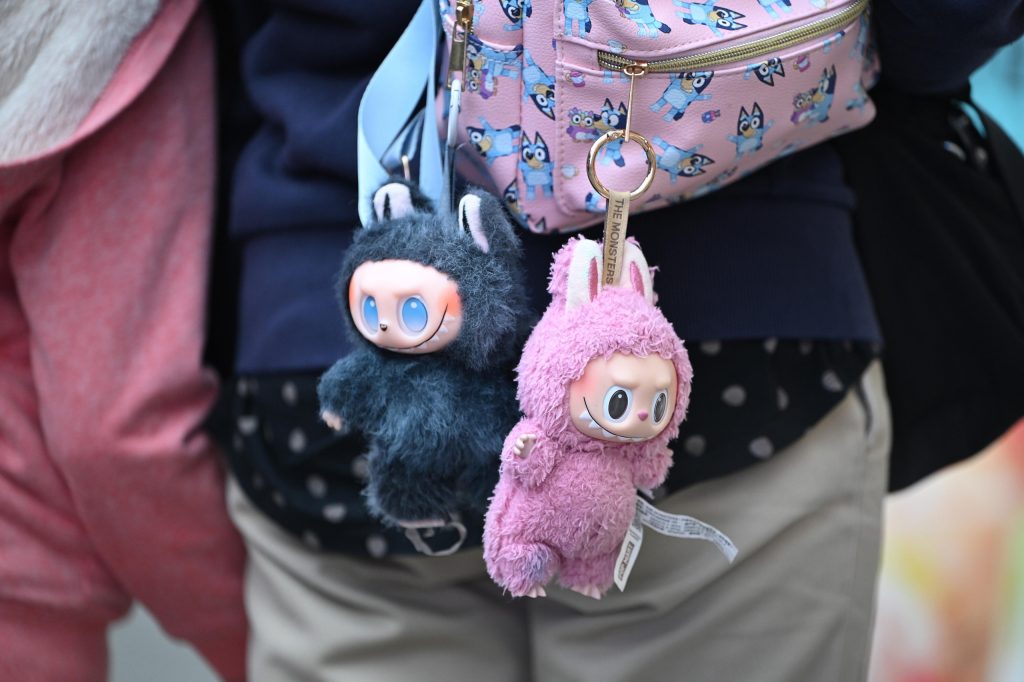
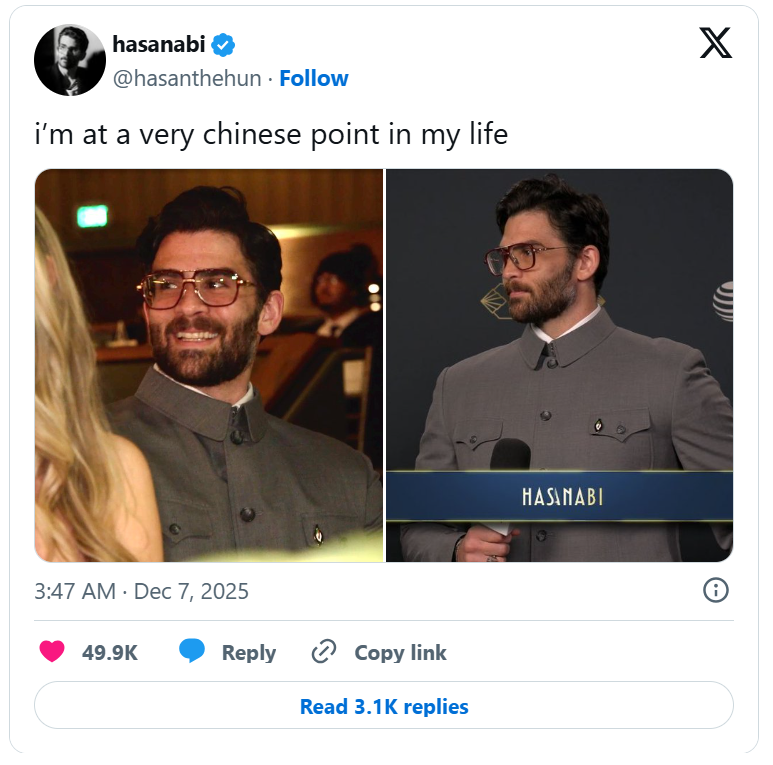
In recent months, ‘Chinamaxxing’ content like this has taken Western social media platforms by storm. Across X, TikTok and Instagram, influencers—mostly English-speaking—are documenting their attempts at “becoming Chinese”. The trend depicts China or elements of Chinese culture as attractive, fun and desirable—whether it be wellbeing aspects (think drinking hot water, practicing tai chi, wearing Adidas Tang-style jackets or collecting Labubu dolls) or political commentary praising Chinese-style modernity (think tech advancement, safety and perceived social stability). More fundamentally, it goes against the conventional wisdom that China cannot build its soft power in the direction of Japan or South Korea.
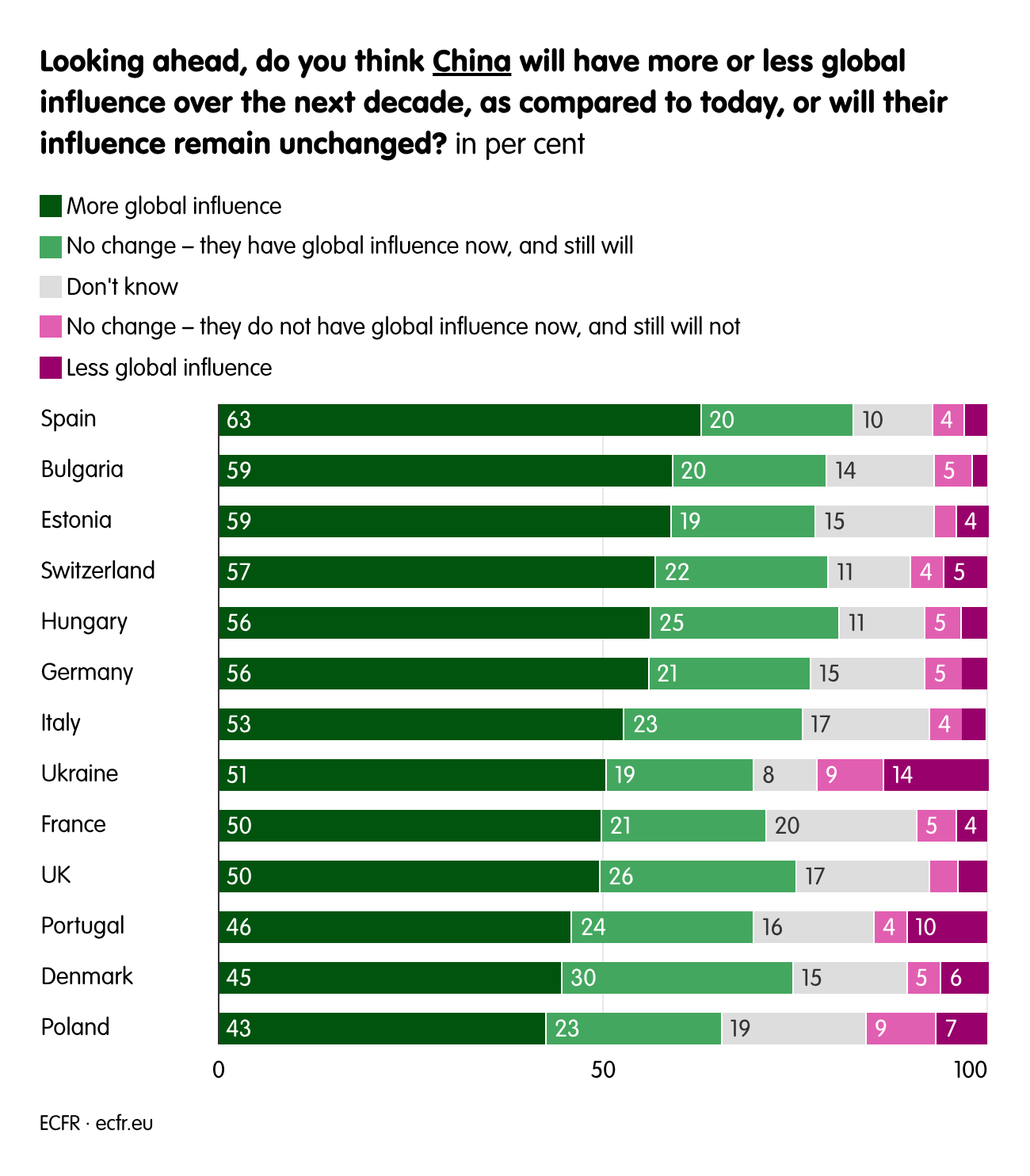
This trend is not happening in a political vacuum. In the West, the geopolitical turmoil brought about by Trumpian politics is reversing long-held assumptions about the nature of the US-led world order. This has only exacerbated growing disillusionment with Western politics, especially among the youth. Data suggest that views of China are becoming more positive across major Western countries, with the public increasingly viewing Beijing as more dependable than Washington. A Politico poll recently found that 40% of Germans now say that it is better to depend on China, with only 24% saying the same about the US. These ideas seem to resonate the strongest with the youth, with 19% of Germans aged 18-24 saying their country should get closer to China, as compared to only 7% among those aged 25 or older, according to the same poll. In France, these numbers are even higher, with 22% of the youngest respondents advocating for closer ties with China. Meanwhile, ECFR polling from November 2025 shows that Europeans overwhelmingly think China’s global influence will grow.
Coupled with reports suggesting that young Europeans use social media and online platforms as primary sources of information about China, Chinamaxxing might be more important to shaping European debates on China than one might expect. Young generations’ overreliance on social media could disproportionately impact how they form their opinions on China’s political system and global influence.
A reaction to American decline
So, how did we get here? Beijing has long invested in its “discourse power”—the ability to control the global debate about China in line with its key interests—yet it has long been accused of being unsophisticated or even counterproductive in its efforts. While it has adapted its tactics over time, including by using foreign actors to spread its preferred narratives, the origins of Chinamaxxing seem genuinely organic and unscripted by the authorities in Beijing. Indeed, it might be a sign of something bigger: a fertile political ground from which positive perceptions of China can grow.
In English-speaking media, the majority of Chinamaxxing content is created in the US, reflecting a social critique of the state itself. It is not about portraying a nuanced picture of China. Instead, it is a projection of what is missing in America and what is seemingly more present in China—infrastructure investment, low crime rates, affordable leisure.
“Even if Chinamaxxing is more about creating distance from Washington than getting genuinely closer to Beijing, it could herald a new era where China does not have to do much to be seen in a much more positive light”
In Europe, the picture is less clear. Chinamaxxing is an American trend and while young Europeans consume English-language content, commentary is slowly appearing in European languages like French, German and Spanish. Even if it is more about creating distance from Washington than getting genuinely closer to Beijing, it may herald a new era where China does not have to do much to be seen by young Europeans in a more positive light.
Coupled with visa waivers issued by China to a growing number of countries and celebrity figures travelling to China (most recently Timothée Chalamet played table tennis with locals in Chengdu), China now seems much more in reach to the average European than it did a few years ago. Even the artist Ai Weiwei—once a global icon of resistance against the authorities in Beijing—has gone back to China, claiming that he feels the same kind of surveillance and censorship in the West.
In China, while Chinamaxxing has not become a major point of discussion, its reverse– the ‘kill line’ trend—offers an insight into just how negatively the US is seen. Originating from video game slang, the term refers to the point of no return when an individual lives on the brink of ruin, and, eventually, is forced into poverty, homelessness and social degradation. It contrasts US economic precarity with China’s system, presenting the former as abusive towards the working class.
For many in China, the ‘kill line’ symbolises the end of the American dream. In January, the notion was officially recognised by the Chinese Communist Party’s official theoretical journal Qiushi, where it was described as revealing an “institutional arrangement systematically prioritising capital security and return over the survival and dignity of workers”. This trend is very much in line with Beijing’s interest to divert people’s attention away from China’s domestic problems, such as its slowing economy and high unemployment rates among the youth.
How each side caricatures the other reveals much about its own sense of direction. Americans who have lost faith in their country’s future project that hope onto China; Chinese bloggers, meanwhile, burnish their perception of China’s rise with images of a broken America.

Orientalism that works for Beijing
Europeans should realise that China has not changed, only their perceptions of China have. Essentially, Chinamaxxing might be yet another form of Orientalism, yet this time around it is in line with Beijing’s strategic interests. It is about non-Chinese people re-imagining China and projecting their own aspirations, fears and shortcomings onto an imagined China.
In recent decades, much of Europe’s China policy has been based on projections of what China should be—based on the idea it should liberalise politically once it integrates with global markets. Those assumptions have proven wrong. In an increasingly fragmented media landscape governed by opaque algorithm logic and social media that thrives on extremes, it will become even harder to build literacy around the realities of China. And yet the reality remains that it is an authoritarian state with a revisionist mindset, a state-led industrial policy that threatens European competitiveness, and a security logic that brings it closer to Europe’s existential threats, including Russian imperialism.
Stronger China-related curriculum is needed both at European schools, but also in the broader public debate, with more investment into investigative journalism and in-depth coverage of China. While the Chinamaxxing trend is not here to stay, the dynamic it represents is much more entrenched trend across the West. If ignored, it will create new challenges for Europeans’ China-related policymaking in the future.
The author would like to thank Sonia Li for her research support.
The European Council on Foreign Relations does not take collective positions. ECFR publications only represent the views of their individual authors.