
As Hong Kong prepares its first five-year plan, the key question is not simply what policies to pursue, but whether its governance system is equipped to deliver coordinated, transformative outcomes in an increasingly complex world.
 The opportunities are clear. Under the national 15th Five-Year Plan (2026-30), Hong Kong will strengthen its roles as an international financial center, a global shipping and trade hub, and an innovation and technology center, while deepening integration into the Guangdong-Hong Kong-Macao Greater Bay Area. If approached strategically, these priorities can also reinforce Hong Kong’s position as a hub for high-caliber talent, since skills and capabilities develop around real economic activity.
But achieving these ambitions requires more than sector-specific policies. It requires governance that can coordinate across domains, align public and private actors, and translate strategy into implementation at scale.
Hong Kong has long been known for its capable and efficient public administration. Its traditional approach — sector-based policies and incremental improvements — has delivered strong results over decades. Government policy bureaus and departments have largely operated within their respective domains.
However, today’s challenges are different.
Issues such as climate change, building retrofits, transport decarbonization, and biodiversity conservation do not neatly fit into a single sector. They cut across energy, infrastructure, finance, technology, and talent. Delivering results requires sustained collaboration and coordination across government, regulators, and the private sector.
Here lies the limitation of an initiative-based system within a siloed structure. While individual bureaus can effectively develop and implement policies within their domains, when solutions require cross-sector alignment, progress can become fragmented, less impactful, and harder to translate into compelling policy narratives.
The risk is a lack of integration. A more effective approach is to organize policy around clearly defined missions.
Mission-oriented governance starts with outcomes rather than individual initiatives. It aligns policy, investment, and stakeholders around shared objectives, and provides a framework for coordinating action across sectors. This approach is already evident in the Chinese mainland’s development model, where “green development” under the principle of ecological civilization, is not treated as a standalone policy area but integrated into industrial upgrading, energy transition, infrastructure planning, and long-term economic resilience.
For Hong Kong, adopting a mission-oriented approach would allow it to move from coordinating policies to integrating outcomes. It would also improve efficiency. Instead of parallel programs with overlapping objectives, mission alignment brings together resources and responsibilities, reduces duplication, and enables faster decision-making.
Hong Kong’s administration, under its inaugural five-year plan, would do well to adopt ecological civilization as a guiding development principle.
Hong Kong stands at an important juncture. The city has the assets, capabilities, and strategic position to play a leading role in high-quality development under the 15th Five-Year Plan, supported by its own five-year plan. The challenge is to translate ambition into outcomes
Consider four areas that illustrate both the challenge and the opportunity.
First, retrofitting existing buildings. Most of Hong Kong’s building stock already exists, and much of it is aging. Improving energy efficiency at scale is not only an environmental priority but also an economic one that improves social well-being. Yet retrofitting involves fragmented ownership, high upfront costs, and coordination across multiple policy, finance, and technical domains. Without a mission-driven approach that cuts across bureaus and departments responsible for energy, works, and finance, progress will remain slow.
Second, nature-positive development. Hong Kong has made progress in biodiversity policy and nature-based solutions. But long-term ecological stewardship requires more than project-based funding. It requires integrating conservation into land-use planning, infrastructure design, and financing models to ensure natural assets are managed sustainably over time.
Third, green aviation and maritime systems. These sectors are inherently global. Hong Kong must align with international standards while positioning itself within emerging low-carbon fuel systems. The challenge is not only technological, but structural: How to create demand certainty for clean fuels and port electrification, reduce investment risk, and build market frameworks that can scale.
Fourth, green and transition finance. Hong Kong has become a major hub for green bonds and sustainable finance. The real challenge is to connect finance with real-economy transformation, develop investable project pipelines, align policy signals, and structure risk-sharing mechanisms that allow capital to flow at scale, including for the projects described above.
Across all four areas, the pattern is the same: The constraint is not ambition or capital but coordination. This points to a broader shift in how the government’s role should be understood.
Traditionally, the government sets policy direction and regulates markets. In a mission-oriented framework, it must go further — acting as a transforming systems architect. This means designing the conditions under which coordinated action can occur. It involves aligning policy frameworks, mobilizing public assets, enabling private-sector participation, and creating platforms for collaboration and co-learning.
Hong Kong already has some of these elements. For example, the relatively new role of having a climate commissioner, as well as the Green and Sustainable Finance Cross-Agency Steering Group. These attempts demonstrate that coordination across the administration and among regulators can improve policy clarity and market development. But even this must go further from coordination toward actively shaping markets that can crowd in private capital.
Hong Kong does not lack capital. The question is how to structure demand, pipelines, and risk-sharing mechanisms to deploy capital effectively. Public finance can play a catalytic role by leveraging government projects and assets to create early demand and reduce risk, thereby attracting private investment. In some cases, philanthropy can also help lower the risk for other forms of capital. This includes aggregating projects, developing standardized models, and building market infrastructure. In this way, finance becomes not just a funding source but a strategic lever for development.
Technology, particularly artificial intelligence and data, will also be a critical enabler. Hong Kong’s universities are already developing advanced capabilities in climate modeling and risk assessment. These tools can improve decision-making across sectors, from infrastructure planning to insurance and finance. But their impact depends on integration. Data, models, and insights must be translated into policy and investment decisions through collaboration between government, academia, and industry.
Finally, mission-oriented governance requires a shift in institutional culture. Silo-based working practices, where each bureau focuses narrowly on its own responsibilities, are not well-suited to cross-sector challenges. Greater collaboration, shared ownership of outcomes, and stronger leadership at senior levels will be essential. Importantly, this does not require a fundamental overhaul of Hong Kong’s system. The public administration is highly competent. The task is to evolve so that it operates at a level that matches the complexity of today’s challenges.
Hong Kong stands at an important juncture. The city has the assets, capabilities, and strategic position to play a leading role in high-quality development under the 15th Five-Year Plan, supported by its own five-year plan. The challenge is to translate ambition into outcomes.
A mission-oriented, system-based approach offers a practical way forward. By aligning policy, finance, infrastructure, and stakeholders around clear objectives, Hong Kong can strengthen its competitiveness, enhance efficiency, and reinforce its role as a globally connected, forward-looking economy. In doing so, it will not only keep pace with change but help shape it like an architect.
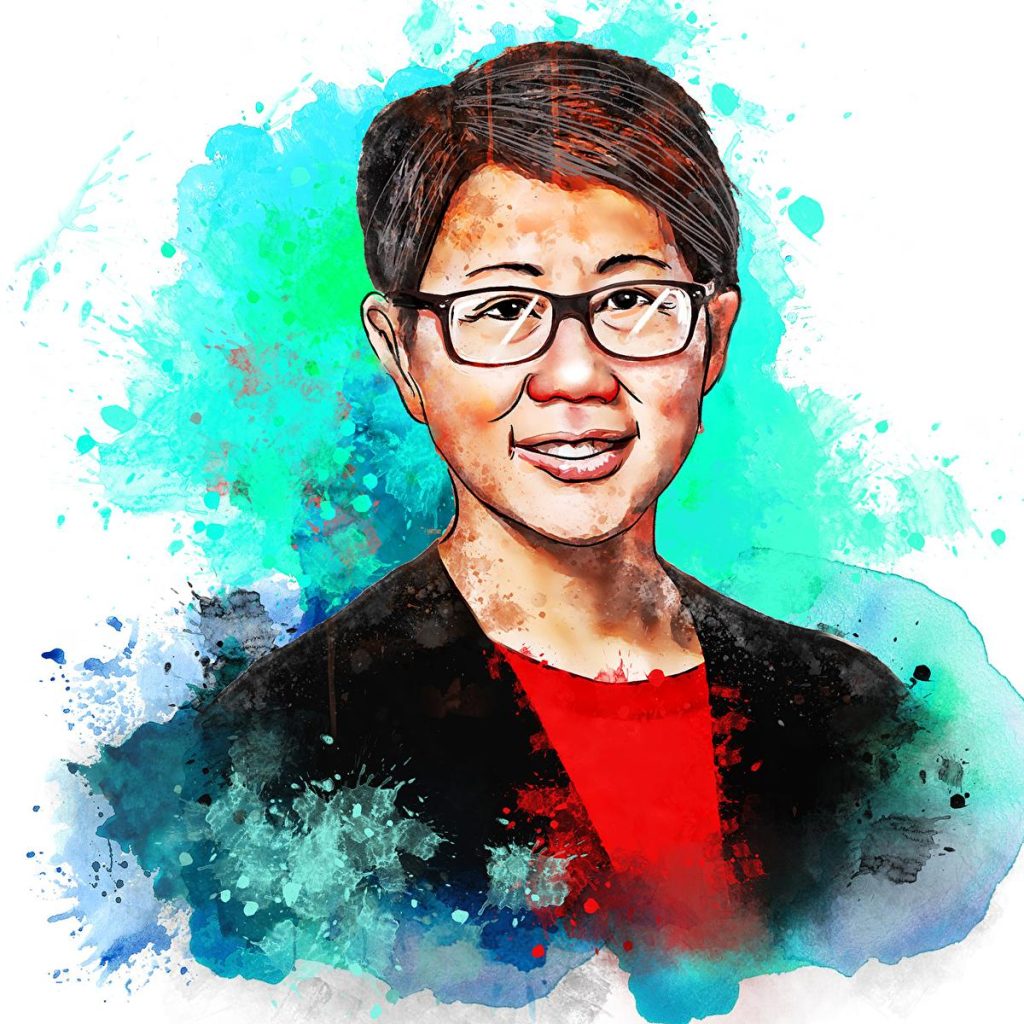
The author is chief development strategist at the Hong Kong University of Science and Technology’s Institute for the Environment.
The views do not necessarily reflect those of China Daily.