
Unlock the Editor’s Digest for free
Roula Khalaf, Editor of the FT, selects her favourite stories in this weekly newsletter.
Black Friday is supposed to be the Super Bowl of discounting in the US. This year it may end up being more like a nervous scrimmage. Retailers, squeezed by President Donald Trump’s tariffs, may be dialling back on the discounts. Shoppers, for their part, appear reluctant to splurge. The result may be a soggy start to the festive season.
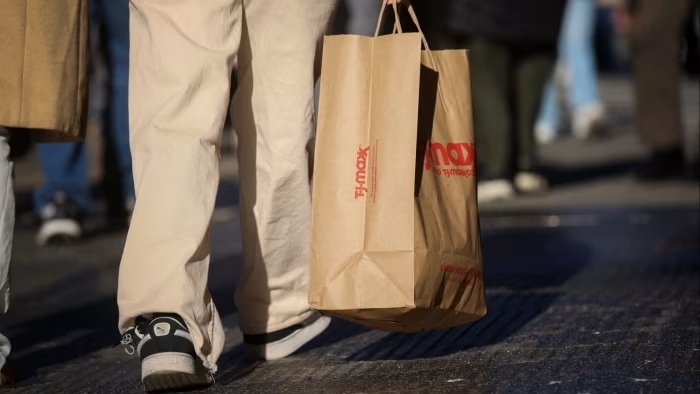
One retailer, though, is untroubled by the stand-off. TJX, parent of TJ Maxx, which Europeans will know as TKMaxx, Marshalls, and HomeGoods thrives on discounts 365 days a year. For the off-price retail heavyweight, whose stock has nearly doubled over the past two years to reach $166bn, Black Friday is not a make-or-break moment, but just another day in the calendar.

Conventional wisdom says brick-and-mortar chains need a big online presence to survive. But that does not appear to hold for TJX’s off-price empire. TJ Maxx, Marshalls and HomeGoods — with 5,191 stores globally and $56.3bn of sales — all have minimal ecommerce presence. Online sales accounted for less than 2 per cent of TJX’s revenue last year.
This is by design. The company buys merchandise opportunistically: snapping up excess inventory from top brands and selling it at steep markdowns. Constantly changing assortments encourage shoppers to rummage in person. That unpredictability also makes online retailing unviable since items cannot be reliably replenished and those returned might no longer find a space on its shelves.
TJX’s strategy is serving it particularly well at the moment, with the uncertain environment creating phenomenal sourcing conditions. “It’s off the charts,” chief executive Ernie Herrman told analysts earlier this month. “We have so much availability across brands in many categories and . . . some [in] categories that we hadn’t seen in a while.” The company’s $4.6bn cash pile gives it plenty of firepower to pick up goods that its rivals can’t flog. That contributed to TJX’s strong same-store sales, up 5 per cent in the most recent quarter, and raised full-year guidance.
Seen from Silicon Valley, TJX may well be the ultimate anti-tech stock. While most companies are spending heavily on AI-powered recommendation search engines, automated fulfilment centres and faster delivery, TJX prospers by ignoring the digital arms race. The company needs neither sophisticated chatbots nor expensive last-mile delivery networks. Its advantages are resolutely analogue: opportunistic buying teams, canny store managers and customers who enjoy treasure hunting. At a time when investors are fretting about the high investment and uncertain pay-offs of many AI-focused ventures, TJX’s low-tech simplicity is appealing.